In the dynamic world of startups, founders often excel in the art of pitching their ideas, weaving compelling narratives, and creating visually appealing presentations. However, the challenge for potential investors lies in separating the wheat from the chaff and uncovering the truth behind the well-crafted facade.
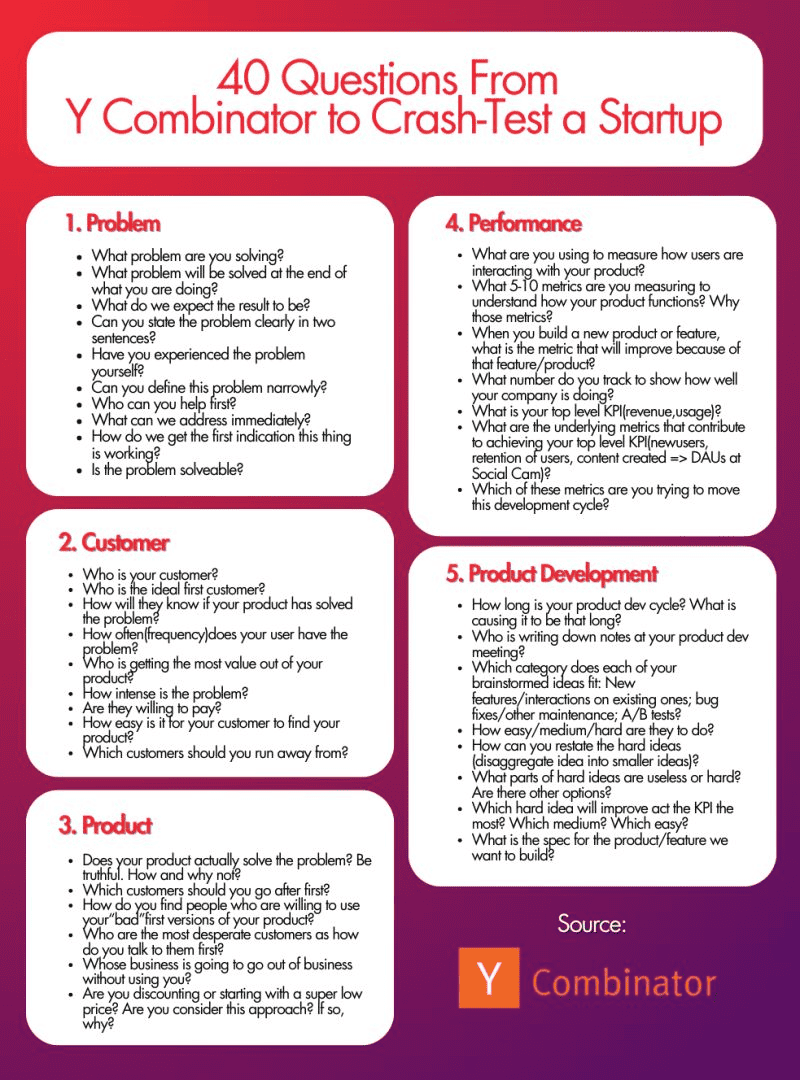
Y Combinator, a renowned startup accelerator, has devised a set of crucial questions to serve as a litmus test for startups seeking investment. By delving into these questions, investors can gain valuable insights into a startup’s viability and potential for success.
- “Who can you help first?”
Understanding a startup’s target audience is paramount. By asking this question, investors can gauge the founder’s ability to identify and focus on the right customer segment. A well-defined target audience indicates a strategic approach to market penetration and a higher likelihood of meeting user needs. - “How often do they have the problem?”
Successful startups address genuine pain points in users’ lives. By probing into the frequency of the identified problem, investors can assess the depth of the founder’s understanding of the user’s pain points. A startup that comprehends the regularity of the problem is better equipped to offer a lasting and impactful solution. - “What metric will improve with this feature?”
Every feature a startup develops should contribute to measurable improvements. By asking this question, investors can evaluate the founder’s grasp on key performance indicators (KPIs) and their ability to assess the impact of each product feature. A well-thought-out response demonstrates a data-driven approach to product development and a commitment to delivering tangible value. - “How long is your product development cycle?”
Realism in expectations is crucial for the success of any startup. By inquiring about the product development cycle, investors can discern whether the founder has a pragmatic understanding of the time and effort required to bring a product to market. This question serves as a safeguard against falling for overly optimistic projections that may lead to disappointment down the road.
Conclusion
Use this list before your next investor meeting
The questions in this guide aren’t a quiz — they’re a mirror. Run through them with your co-founder before your next pitch. The ones you can’t answer cleanly are exactly the ones an investor will catch, and the ones worth rehearsing until you can.
If you want feedback on the actual pitch deck behind those answers, we periodically run live pitch deck review sessions where founders get direct critique on their story, structure, and numbers. Subscribe and we’ll let you know when the next one’s open: