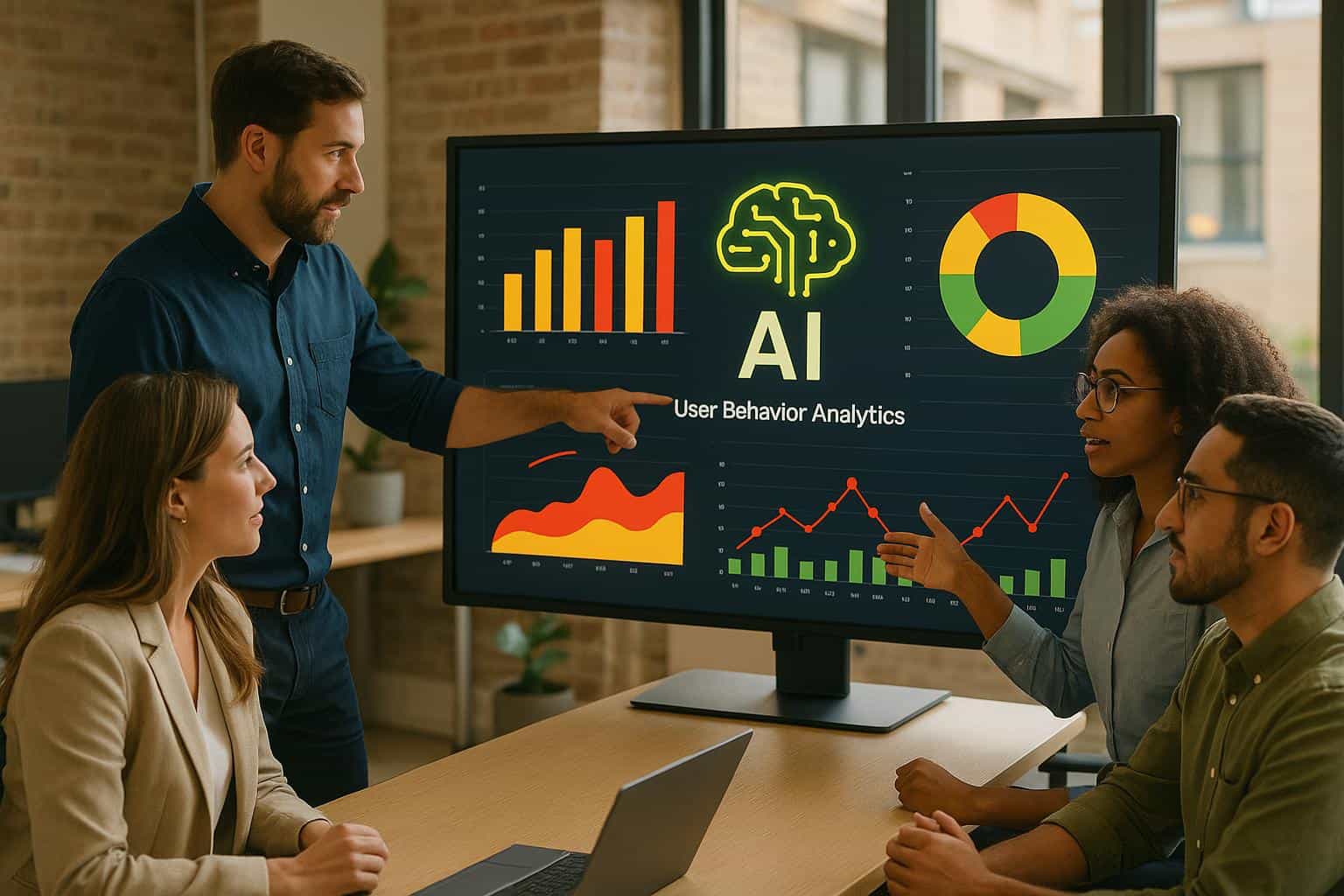
AI transforms in-app ad targeting by analyzing user behavior to deliver personalized, relevant ads. Unlike traditional methods, AI uses machine learning, generative AI, and predictive analytics to optimize campaigns in real time, increasing engagement and revenue. Key benefits include:
- Machine Learning: Analyzes user data like session times and purchase history for precise targeting.
- Generative AI: Creates tailored ad content (images, videos) dynamically for individual users.
- Predictive Analytics: Segments audiences based on behavior, predicting actions like purchases or churn.
AI-powered targeting improves metrics like click-through rates (up to 3%), user retention (up to 50%), and return on ad spend (5-8x higher). By integrating tools like OpenAI and automating workflows, businesses can reduce costs and achieve measurable growth. However, success depends on clear objectives, privacy compliance, and maintaining model accuracy.
AI isn’t just about better ads – it’s about smarter strategies that align with user needs while maximizing ROI. For startups and businesses, adopting AI-driven targeting is a practical step toward staying competitive.
How to Use AI Ads to Drive $1.4M+ in App Revenue

Core AI Technologies for In-App Ad Targeting
Mobile app ad targeting is being reshaped by three key AI technologies: machine learning, generative AI, and predictive analytics. Each of these technologies tackles a unique aspect of ad targeting, making ads less disruptive and more relevant to users. Here’s how they contribute to this transformation:
Machine Learning for User Behavior Analysis
Machine learning dives deep into user behavior by analyzing massive datasets – like navigation patterns, session durations, click-through rates, purchase history, and interactions with app features. These algorithms create detailed behavioral profiles for individual users. For example, an app might identify users who often explore specific product categories and serve them ads tailored to those interests. Since these models constantly update based on new data, the ads stay relevant and timely. This level of precision is a game changer for startups with tight budgets, as it ensures their ad spend goes further by focusing on the right audience.
Generative AI for Dynamic Ad Creation
Generative AI simplifies the process of creating dynamic, personalized ads. Instead of manually designing numerous static ads, this technology generates custom images, videos, and copy that adapt in real time to user preferences and app contexts. Take the case of SparkLabs in 2023: they used generative AI in their mobile game Project Makeover to produce a variety of ad creatives tailored to different player preferences. The result? Higher engagement and less ad fatigue. Similarly, Zalando employs generative AI to customize onboarding and promotional content for specific cities, using regional data like shopping behaviors and search trends to deliver ads that resonate with local audiences.
Predictive Analytics for Audience Segmentation
Predictive analytics takes historical data and turns it into actionable forecasts, segmenting users into highly targeted groups. Instead of relying on basic demographics, these models identify behavioral patterns – like spotting high-value buyers or users sensitive to pricing. They can predict who’s likely to make a purchase, who might uninstall the app, or which group will respond best to specific ad formats. McKinsey research highlights that businesses leveraging AI-driven personalization can see revenue increases of 5–15% and improve marketing efficiency by 10–30%. A great example is Starbucks, which uses predictive analytics to recommend products based on factors like time of day, purchase history, and even local weather. For instance, when temperatures hit 70°F or higher, iced coffee promotions ramp up. By combining device usage, location data, and other behavioral signals, predictive models enable refined audience segmentation, boosting overall campaign success.
At M Studio, we’ve seen firsthand how integrating these three technologies into a unified system can supercharge ad strategies for startups. By connecting CRM, marketing automation, and sales tools, we’ve helped over 500 founders cut sales cycles by 50% and increase conversion rates by 40%. Together, machine learning, generative AI, and predictive analytics create ad experiences that feel natural to users while delivering real results for businesses.
How AI Improves User Behavior Analysis and Ad Relevance
AI is changing the way apps understand their users by diving deep into behavioral patterns that traditional methods often miss. Instead of just looking at basic demographics, AI focuses on what users actually do within apps. This shift from guessing user preferences to observing their actions makes ads far more relevant and effective. By combining insights from various data sources, AI creates detailed user profiles that drive smarter ad targeting.
Data Sources for AI-Powered Targeting
AI-driven targeting pulls information from a variety of data streams to build detailed user profiles. At the core are in-app actions – every tap, swipe, scroll, and interaction is tracked. Metrics like time spent on specific screens, navigation paths, and session frequency reveal a lot about user engagement and preferences.
Beyond in-app behavior, purchase history and browsing patterns shed light on buying habits and product interests. For instance, AI can spot users who frequently browse premium features but haven’t upgraded or those who make impulse buys during certain times. Search queries within apps offer direct insights into user intent, while social media interactions add another layer of understanding.
External factors also play a role. Data like local weather, nearby events, and geographic signals help AI grasp the context behind user behavior. CRM data integration further connects in-app behavior with a user’s overall journey, helping tailor ads to their specific stage in the lifecycle. At M Studio, combining these data sources has led to shorter sales cycles and higher conversion rates through more precise targeting.
Behavioral Profiling and Contextual Targeting
AI uses advanced clustering techniques to group users by shared behaviors. These profiles go beyond demographics, reflecting real usage patterns, engagement habits, and purchase behaviors. For example, AI might identify "weekend power users" who are most active on weekends or "price-sensitive browsers" who only buy during sales.
Contextual targeting builds on these profiles by considering the user’s real-time environment. AI evaluates factors like the current screen, time of day, device type, and activity to decide the best ad placement. For instance, a fitness app might display protein supplement ads right after a workout, while a shopping app adjusts product recommendations based on whether users are browsing during lunch or in the evening.
Zalando demonstrates this approach effectively. In 2023, they used generative AI to customize promotional messages for users in Berlin, Madrid, and Paris by analyzing cart behavior and search queries. This strategy boosted user activation and retention rates by delivering content that felt tailored to each city.
The real power of behavioral profiling lies in its ability to predict what users will do next. AI can flag users likely to churn, those ready to upgrade to premium features, or customers who respond best to specific ad formats. This predictive edge allows apps to deliver the right ad at the perfect moment, enhancing both user experience and campaign results. It also enables real-time adjustments that keep ads relevant and engaging.
Real-Time Adaptation to User Intent
What sets AI apart is its ability to adapt ad placements in real time. As users interact with apps, AI tracks engagement metrics like click-through rates and conversion signals. This data allows it to fine-tune ad strategies on the fly, ensuring ads evolve alongside user behavior.
Dynamic creative optimization takes this a step further. AI can test multiple ad variations and allocate budgets to the top performers. For example, in 2023, Project Makeover’s user acquisition team used this approach to generate and test numerous ad creatives. By tailoring ads to user preferences and reducing ad fatigue, they achieved higher engagement rates and better overall campaign performance.
AI systems also learn continuously from campaign data, adjusting targeting parameters, bid strategies, and creative elements to maximize results. They even monitor ad exposure frequencies to avoid overwhelming users.
Research backs up the impact of AI-driven personalization. Businesses that excel in this area generate 40% more revenue from personalized efforts compared to the average. Additionally, 80% of consumers are more likely to buy from brands that offer personalized experiences. These findings highlight how real-time analysis and adaptation not only improve ad relevance but also drive measurable business results through stronger user engagement.
How to Implement AI-Powered In-App Ad Campaigns
Rolling out AI-driven in-app ad campaigns requires a clear, goal-oriented strategy. The key is to start with your desired outcomes and work backward to establish the necessary steps. This ensures your campaigns achieve measurable results instead of just showcasing flashy tech.
To get started, focus on three main phases: setting clear objectives and metrics, choosing and integrating the right AI tools, and launching campaigns with built-in optimization features. The right AI framework should align with your ad targeting goals. For regular tips on leveraging AI for revenue growth, check out our AI Acceleration Newsletter.
Setting Campaign Objectives and Metrics
Before diving into AI tools, you need to define your campaign objectives. These should tie directly to your business goals and be specific enough to measure. The most effective AI campaigns are built around clear, measurable outcomes rather than vague aspirations. Metrics like cost per install (CPI), engagement rates, and customer lifetime value (LTV) are essential for tracking success.
- Cost per Install (CPI): This measures how well your AI campaigns reduce acquisition costs across various audience segments.
- Engagement Rates: Metrics like click-through rates, session duration, and in-app activity help you assess whether your AI-driven personalization is resonating with users.
- Customer Lifetime Value (LTV): This is the ultimate indicator of your campaign’s success. Users brought in through AI-powered targeting should show higher engagement and retention over time.
At M Studio, we help founders define these metrics by analyzing cohort data and customer lifetime value. This ensures your AI campaigns focus on sustainable growth and measurable results. By setting specific benchmarks based on your current performance, you can clearly measure the impact of your AI-driven efforts.
Selecting and Integrating AI Tools
With your objectives in place, the next step is choosing tools that seamlessly integrate into your existing systems. For predictive modeling and content generation, OpenAI is a great choice. For workflow automation, platforms like N8N or Make/Zapier can simplify processes.
- OpenAI: Ideal for analyzing user behavior and creating personalized ad copy at scale. Tools like GPT-4 can generate multiple ad variations tailored to user segments, time of day, or other contextual factors.
- Claude: Excellent for processing large datasets and identifying behavioral trends that inform targeting strategies.
- N8N: Offers advanced customization for building complex workflows triggered by user actions or AI predictions.
- Make/Zapier: Perfect for startups, offering simpler automation options to get started with AI.
To ensure smooth integration, connect these tools to your existing marketing stack. For example:
- Link AI platforms to your CRM for real-time user data.
- Integrate with analytics tools to track performance.
- Automate bid adjustments and creative updates directly through your ad networks.
At M Studio, we specialize in guiding founders through this implementation process. Through our Elite Founders program, we collaborate with founders in live sessions to create tailored AI-driven systems.
"We architect your AI-powered GTM, implement automation workflows during live sessions, and ensure every system connects to real business outcomes." – M Accelerator
Our 8-Week Startup Program has helped over 500 founders transition from manual processes to AI-powered operations, generating over $75M in funding. These automations have cut sales cycles by 50% and boosted conversion rates by 40%.
Launching and Iterating Campaigns
Once your objectives are clear and tools are integrated, it’s time to launch your AI-powered campaigns. Start with dynamic creative optimization (DCO), which allows AI to test multiple ad variations automatically. The system allocates budget to the best-performing ads, ensuring continuous improvement without the need for constant manual adjustments.
Take Samsung Malaysia’s campaign with Perion as an example. They used AI-driven DCO to create 105 tailored ad variations across 50 screens, optimizing delivery based on time of day and audience density. The result? Over 3 million impressions and insights into peak engagement hours.
To further enhance your campaigns:
- Implement automated bidding strategies that adjust based on real-time performance data, ensuring optimal spend allocation.
- Feed performance data back into your AI models to refine future campaigns. Analyze which creative elements attract high-LTV users, which targeting strategies lower CPI, and which timing boosts engagement.
- Set up automated reporting to track key performance indicators. This allows you to spot significant changes quickly and make adjustments on the fly.
sbb-itb-32a2de3
Measuring AI-Driven Ad Targeting Performance
When it comes to understanding the impact of AI in advertising, metrics are everything. By focusing on the right data points, businesses can identify which campaigns truly generate revenue and offer value to users. AI-driven targeting provides a wealth of information, but the challenge is narrowing down the metrics that matter most for achieving business goals.
Key Performance Indicators (KPIs) to Track
Here are some of the most important metrics to evaluate the effectiveness of AI-driven ad targeting:
- Effective Cost Per Install (eCPI): This measures how efficiently AI targeting reduces acquisition costs by identifying high-value users. A lower eCPI indicates better performance.
- Click-Through Rate (CTR): CTR shows how well AI-generated creatives resonate with the audience. By tailoring ad content to user preferences, AI can boost CTR from the typical 0.5–1% range to as high as 1.5–3%.
- User Retention Rates: Retention rates reveal the staying power of AI-acquired users. Traditional campaigns often see 20–30% retention after 30 days, but AI-driven efforts can raise this to 35–50% by targeting users more likely to stay engaged.
- Return on Ad Spend (ROAS): ROAS is a direct measure of profitability. Companies using AI-powered personalization often achieve 5–8 times higher returns on their marketing investment compared to conventional methods.
- Customer Lifetime Value (LTV): LTV reflects the overall impact of your targeting strategy. AI-acquired users tend to spend more, stay longer, and engage more deeply. At M Studio, we analyze cohort data to help founders see how AI impacts LTV across different customer groups.
- Conversion Rates: AI’s ability to personalize messaging and timing significantly enhances conversion rates. For example, AI-optimized post-demo sequences convert over 40% of prospects, compared to the industry average of 15%.
Pre-AI vs. Post-AI Campaign Performance
The following table highlights the dramatic improvements AI brings to ad targeting campaigns:
| Metric | Pre-AI Performance | Post-AI Performance | Improvement |
|---|---|---|---|
| Conversion Rate | 2–5% | 6–12% | 140–240% increase |
| Click-Through Rate | 0.5–1% | 1.5–3% | 200–300% increase |
| User Retention (30d) | 20–30% | 35–50% | 75–167% increase |
| Revenue per User | $1.50 | $2.10 | 40% increase |
| Effective CPI | $3.00 | $2.20 | 27% decrease |
These numbers highlight AI’s ability to analyze behavioral data – such as in-app activity, session frequency, and purchase intent – and shift from broad targeting to precise segmentation. The result? Ads that are more relevant and impactful.
For instance, SparkLabs’ Project Makeover campaign saw a 30% increase in ad engagement and a 25% boost in conversions compared to campaigns without AI. Similarly, M Studio’s AI-powered systems helped founders cut sales cycles in half and improve conversion rates by 40%.
To measure these gains effectively, businesses should use multi-touch attribution models. Unlike last-click attribution, which oversimplifies the user journey, multi-touch models capture the full path from initial exposure to final conversion. Incremental lift analysis is another essential tool, comparing AI-targeted groups with control groups to quantify AI’s actual impact. Regularly monitoring model accuracy ensures campaigns stay effective, even as user behavior or market conditions evolve.
Common Challenges and Best Practices for AI Adoption
As we delve deeper into the world of advanced AI techniques, it’s clear that adopting AI for ad targeting comes with its share of hurdles. While the potential for impressive results is undeniable, the path to success is often riddled with challenges that can derail even the most well-planned campaigns. Knowing these obstacles ahead of time – and having a solid plan to address them – can be the difference between thriving with AI and facing costly setbacks.
Tackling Data Privacy and Compliance Issues
Navigating data privacy regulations in the U.S. can feel like walking a tightrope, especially for startups leveraging AI in ad targeting. Laws like the California Consumer Privacy Act (CCPA) and the Children’s Online Privacy Protection Act (COPPA) set strict standards for how data is collected, stored, and used. For AI systems, this means ensuring that user data is handled transparently and securely.
Start by implementing clear and detailed consent mechanisms for activities like marketing analytics and personalized ad targeting. Not only does this help meet legal requirements, but it also builds trust with users, often encouraging higher participation rates.
To safeguard privacy without compromising AI performance, use data anonymization techniques such as federated learning. This method allows insights to be drawn from data without ever transferring raw, sensitive information. It’s a win-win: privacy stays intact, and targeting remains effective.
Regular compliance audits are a must. Partner with legal experts who understand both privacy laws and the nuances of AI technology. The cost of staying ahead of regulations pales in comparison to the potential fines, which can climb into the millions for serious infractions. Beyond legal concerns, focusing on model accuracy is equally critical to success.
Maintaining Model Accuracy and Addressing Bias
Even with strong privacy measures in place, ensuring the accuracy of AI models is vital for effective ad targeting. Without proper oversight, AI systems can quickly become outdated or biased. A common culprit? Imbalanced training data. If certain user groups are underrepresented in the data, the resulting models can perform poorly for those audiences, leading to ineffective and unfair ad targeting.
To keep models accurate, prioritize high-quality, representative training data that mirrors your actual user base. Regularly monitor performance through real-time analytics and establish clear thresholds to determine when retraining is needed. As user behavior shifts, your models should evolve with it.
Tools like cross-validation and A/B testing can help identify issues early. For instance, automated alerts can flag drops in key metrics like click-through or conversion rates, allowing for quick intervention before significant ad spend is wasted.
Bias mitigation is an ongoing effort. Test your models regularly for disparities across demographics, locations, and device types. Techniques like fairness-aware machine learning can help address bias during training. Additionally, external audits by independent data science teams can provide an unbiased evaluation of your algorithms.
Best Practices for Successful AI Implementation
When implementing AI, start simple. Begin with basic models and gradually introduce complexity. This step-by-step approach helps avoid overfitting and makes it easier to pinpoint what’s driving performance improvements.
Transparency is key. Use unified dashboards to track real-time performance metrics, model confidence scores, and feature importance rankings. This level of visibility fosters trust between technical and marketing teams, enabling faster adjustments when issues arise.
Collaboration is another cornerstone of success. Bringing together data scientists, marketers, and compliance officers ensures that AI initiatives stay aligned with both technical goals and business objectives. Regular review meetings can help identify potential problems early, keeping projects on track.
AI adoption isn’t a one-and-done process – it’s continuous. Build feedback loops that connect user behavior data with model updates. This iterative refinement ensures your targeting algorithms stay sharp and responsive to real-world campaign performance.
For businesses looking to move beyond theory, hands-on support can make all the difference. Programs like weekly AI + GTM implementation sessions bridge the gap between AI concepts and tangible revenue results. By treating AI as a dynamic, evolving system, companies can transform manual advertising efforts into scalable, automated engines that deliver measurable growth.
Conclusion: The Future of In-App Ad Targeting with AI
AI is reshaping in-app ad targeting, turning it from a minor enhancement into a game-changing approach to audience engagement. The results speak for themselves: companies leveraging AI-powered targeting often see conversion rates jump by 15–25% compared to traditional methods, and those excelling in AI personalization report a 15% boost in customer retention. By focusing ad spend on users who are genuinely interested, AI ensures every dollar delivers maximum impact. Want to stay ahead? Subscribe to our AI Acceleration Newsletter for weekly insights on building scalable, automated revenue systems.
AI’s ability to refine real-time targeting is unparalleled. The future lies in hyper-personalization at scale. As these technologies advance, we can expect even more sophisticated tools – like predictive user intent modeling, real-time creative optimization, and contextual targeting that adapts instantly to user behavior. With the average person exposed to 4,000–10,000 ads daily, personalization powered by AI isn’t just helpful – it’s essential for breaking through the clutter and fostering meaningful connections.
For startups and growth-stage companies, the potential is enormous, though execution requires careful planning. Businesses that embrace AI-driven targeting gain a clear edge. By integrating AI into every stage of the customer journey – from the first ad impression to conversion and retention – they create seamless, personalized experiences that resonate. Achieving this level of precision calls for a strategic approach to automation and optimization.
At M Studio, we specialize in building systems that drive measurable revenue growth. Our hands-on programs go beyond theory – founders actively create automations that deliver immediate results. Whether through our Elite Founders program or our 8-Week Startup Program, we help transform manual advertising efforts into scalable, automated engines.
The tools are here, the results are proven, and the companies that act quickly will reap the rewards. AI isn’t just a tool – it’s the foundation of modern, automated growth strategies. By embracing it, every interaction with a customer becomes an opportunity to make a lasting, meaningful impact.
FAQs
How does AI keep in-app ads relevant and personalized for users over time?
AI takes in-app ad targeting to the next level by analyzing user behavior, preferences, and engagement patterns in real-time. Using machine learning, it spots trends and adjusts ad content to match users’ shifting interests. This keeps ads not only relevant but also engaging.
With AI, businesses can create highly tailored ad experiences that resonate with individual users. This personalization boosts user satisfaction and increases the chances of conversions. Over time, these systems become even sharper at targeting, ensuring ads hit the mark while cutting down on irrelevant content.
What challenges might businesses face with AI-powered in-app ad targeting, and how can they address them?
Implementing AI-driven in-app ad targeting comes with its fair share of challenges. These can include concerns about data privacy, limited access to high-quality data, and the struggle to integrate AI tools with existing systems. To tackle these hurdles, businesses should focus on adhering to privacy regulations like GDPR and CCPA, maintaining clean and actionable data, and seeking expert advice to ensure AI tools work smoothly with their current technology setup.
Another smart move is to start on a smaller scale – test AI solutions on specific campaigns before rolling them out widely. This cautious approach reduces risks, gives teams a chance to fine-tune their strategies, and builds confidence in the technology as they see it in action.
How can startups effectively track the success of AI-driven in-app ad campaigns?
Startups can gauge the success of AI-driven in-app ad campaigns by keeping an eye on key performance indicators (KPIs) tied to their business objectives. Metrics like click-through rates (CTR), conversion rates, return on ad spend (ROAS), and customer acquisition costs (CAC) are essential. Regularly tracking these figures helps paint a clear picture of how well campaigns are performing and highlights areas that might need improvement.
AI tools also bring a deeper level of analysis by examining user behavior and engagement patterns. For instance, monitoring user retention rates or the time users spend interacting with ads offers valuable insight into how relevant and effective the ads are. Pairing these findings with A/B testing allows startups to fine-tune their campaigns for even better results.
To get the most out of these efforts, startups should connect their AI tools to a solid analytics platform. This ensures real-time data collection and delivers actionable insights, helping teams make smarter, faster decisions.