

How to Create a Customer Journey Map for Startups
How to Create a Customer Journey Map for Startups
This guide walks founders and early-stage teams through crafting a customer journey map that reflects the unique challenges of startups. It covers:
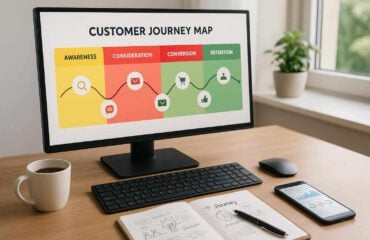
- Key Stages for Startups: From initial awareness (e.g., social media ads, founder outreach) and interest (landing page visits, demo sign-ups) to consideration (free trials, onboarding), decision (first purchase or subscription) and retention (support interactions, feature updates).
- Essential Touchpoints & Pain Points: Identify high-impact touchpoints—website homepage, signup flow, onboarding emails, in-app messaging—and common pain points, such as unclear value propositions, friction in signup forms, or lack of timely support.
- Tools & Templates: Step-by-step instructions for using free and low-cost tools tailored to lean teams, including FigJam and Miro templates, Google Sheets journey map frameworks, and startup-focused canvases from Startups.com.
- Real-World Examples & Best Practices: Illustrative case studies from startup success stories showing how early customer feedback reshaped product-market fit, reduced churn by mapping support touchpoints, and prioritized feature development based on emotional highs and lows.
- Alignment Tips: Advice on aligning the journey map with your startup’s growth goals—optimizing trial-to-paid conversion, highlighting referral opportunities, and integrating metrics (activation rate, NPS) to drive data-informed iterations.
By the end of this article, startup teams will have a practical, customized framework for mapping their customers’ experience, uncovering critical insights to inform product roadmaps and accelerate growth.
Business Type
Startups
Industry
Startup
Key Stages of the Customer Journey
- Awareness
- Consideration
- Purchase/Decision
- Onboarding
- Usage
- Support
- Loyalty/Advocacy
Essential Touchpoints to Map
- Awareness stage where customers first learn about the startup’s product or service
- Consideration phase where customers evaluate functionality, cost, and benefits
- Customer interactions across multiple channels requiring consistent communication
- Feedback collection points such as surveys, interviews, and social media engagement
- Customer support and service interactions addressing pain points and concerns
- Purchase or conversion points where customers decide to buy or subscribe
- Post-purchase follow-up and engagement to nurture loyalty and satisfaction
- Touchpoints involving emotional mapping to understand customer feelings and expectations at each stage
- Data collection and analytics touchpoints to monitor customer behavior and journey effectiveness
Common Pain Points
- Financial pain points where customers feel they are overpaying or losing money.
- Process-related pain points involving tasks that are too complicated or time-consuming for customers.
- Support-related pain points such as poor customer service or unresponsive help.
- Product-related pain points where products do not meet customer expectations or are difficult to use.
Target Audience
- Startup founders
- Marketing teams in startups
- Product managers in startups
- Customer experience professionals in startups
- Early-stage startup employees involved in customer engagement
- Growth and scaling teams in startups
Target Audience
- Startup founders
- Marketing teams in startups
- Product managers in startups
- Customer experience professionals in startups
- Early-stage startup employees involved in customer engagement
- Growth and scaling teams in startups
Recommended Tools for Journey Mapping
- Lucidchart
- FigJam
- Smaply
- Canvanizer
- Reveall
- TheyDo
- UXPressia
- Microsoft PowerPoint
- Gliffy
Available Templates
- Canva Customer Journey Map Template: A visually organized template using a color-block system, effective for collaborative sessions and quick understanding of journey stages. Suitable for startups needing a clear, visually engaging map. (https://www.canva.com/templates/s/customer-journey-map)
- Miro Customer Journey Map Template: A detailed template that breaks down the journey into clear stages with spaces for customer needs, motivations, pain points, and touchpoints. It supports creating personas and mapping all customer interactions, ideal for startups focusing on user-centric design. (https://miro.com/templates/customer-journey-map)
- Looppanel User Journey Mapping Template: A modern, aesthetic Figjam template that balances comprehensiveness and usability, highly customizable for startups needing to document complex user journeys without losing clarity. (https://www.looppanel.com/blog/customer-journey-map-template)
- Figma Journey Map Template by Kyra K.: A clean, straightforward template popular for its simplicity and effectiveness, suitable for startups and teams new to journey mapping. (https://www.figma.com/community/file/1167700722702284382/journey-map-template)
- NN/g Customer Journey Map Template: A focused template emphasizing user actions, thoughts, and pain points, ideal for startups wanting a straightforward, research-based approach. (https://media.nngroup.com/media/articles/attachments/JMTemplate.pdf)
- Customer Journey Map Template for Sketch: A bundle offering multiple layouts, useful for startups using Sketch for design work, providing flexibility in journey map presentation. (https://dribbble.com/shots/4232985–Free-Template-Journey-Map-Bundle)
- Customer Journey Layer Map for PowerPoint: A comprehensive pack of editable slides, accessible for startups needing to present journey maps to stakeholders in a familiar format. (https://www.slidesalad.com/product/customer-journey-maps-powerpoint-template-diagrams/)
Real-World Examples
One notable real-world example of customer journey mapping for startups is from an emerging EdTech startup in North America, which faced challenges optimizing its customer journey amid rapid market changes. The startup experienced a 20% decrease in user engagement and a 15% drop in subscription renewals over a quarter. By implementing a strategic customer journey mapping framework, the startup identified critical pain points and opportunities to enhance user engagement and retention, ultimately aiming to improve subscription renewals and market presence. This case highlights the importance of mapping customer interactions and emotions to address churn and optimize the user experience in a competitive startup environment. (Mark Bridges)
Another example is Spotify, a consumer SaaS company, which created a customer journey map to improve its music-sharing experience. The journey map detailed the user experience from opening the app to sharing songs, identifying pain points such as users being unaware of sharing features or feeling judged for music habits. Addressing these pain points led to a smoother, more engaging experience that encouraged more frequent music sharing and increased customer satisfaction. This example illustrates how startups and SaaS companies can use journey mapping to enhance feature adoption and user engagement. (Woopra, UXtweak)
TurboTax, a startup-turned-enterprise in the SaaS tax preparation space, also utilized customer journey mapping when launching a new product, Personal Pro. By combining data research, customer surveys, and professional insights, the team mapped the customer experience from website entry to tax filing completion. This allowed them to identify and address pain points, resulting in a smoother and more satisfactory customer experience. This case demonstrates how startups can leverage journey mapping to refine complex service processes and improve customer satisfaction. (Woopra, UXtweak)
These examples underscore key startup considerations: understanding customer emotions and behaviors at each touchpoint, identifying pain points and opportunities, and using data-driven insights to enhance engagement and retention through tailored journey maps.
Best Practices
Creating a customer journey map for startups involves several actionable best practices to ensure the map is effective, actionable, and aligned with both customer needs and business goals:
- Set Clear Goals: Define what you want to achieve with the customer journey map. For startups, this might include understanding user needs, optimizing conversion points, or identifying drop-off stages. Establish specific KPIs like customer satisfaction, conversion rates, or engagement metrics to measure success.
- Understand Your Customers Deeply: Conduct thorough research to develop detailed customer personas representing different segments of your target market. Use interviews, surveys, and feedback tools to capture diverse user behaviors and motivations. Avoid oversimplifying personas to ensure the map reflects real customer diversity.
- Create Separate Maps for Different Buyer Personas: Recognize that different customer segments have unique journeys. Design distinct maps for each persona to tailor experiences and address specific touchpoints relevant to each group.
- Map the Entire Customer Journey: Include every stage from initial awareness through consideration, purchase, post-purchase support, and advocacy. Track all touchpoints, both online and offline, including website interactions, social media, customer service, and more.
- Collaborate Across Stakeholders: Involve cross-functional teams such as marketing, sales, product development, and customer service to gather comprehensive insights. Engage high-level decision-makers early to secure buy-in and facilitate implementation of improvements.
- Identify and Address Pain Points: Pinpoint friction points where customers face challenges or drop off. Use data and customer feedback to understand why these issues occur and prioritize them for resolution.
- Focus on Customer Emotions and Moments of Truth: Capture how customers feel at each stage to identify critical interactions that impact their perception. Designing for emotional resonance can improve satisfaction and loyalty.
- Leverage Data-Driven Insights and Tools: Use analytics, heatmaps, session recordings, and survey tools to gather quantitative and qualitative data. This helps validate assumptions and continuously refine the journey map.
- Iterate and Improve Continuously: Treat the journey map as a living document that evolves with changing customer behaviors and market conditions. Regularly update it based on new insights and feedback.
- Tailor Digital Experiences for Startups: Optimize key digital touchpoints such as website navigation, onboarding flows, and checkout processes to reduce friction and enhance user engagement.
By following these best practices, startups can create customer journey maps that not only visualize the customer experience but also drive actionable improvements to product design, marketing strategies, and customer support, ultimately fostering growth and customer loyalty.
These practices are synthesized from expert guidance and real-world examples provided by Hotjar, Glance, and Mouseflow, which emphasize goal-setting, customer understanding, collaboration, and continuous improvement as critical to successful journey mapping for startups and similar businesses.
Tips for Aligning Journey Maps with Business Goals
For startups, aligning customer journey maps with business goals and customer needs involves several key strategies. First, startups should integrate customer journey insights with key performance indicators (KPIs) to reliably measure the effectiveness of their marketing and customer engagement strategies. Continuously updating the customer journey map is essential to reflect evolving customer preferences and needs, ensuring the map remains relevant and actionable. Actively involving customers in the mapping process through qualitative research such as surveys and interviews provides valuable insights into customer emotions, pain points, and expectations, which helps tailor messaging and experiences effectively. Startups should focus on identifying crucial touchpoints where customers engage with their products or services, understanding the emotional landscape at each stage to craft targeted strategies that resonate with users. Consistency across all communication channels and touchpoints builds trust and loyalty, while regular feedback collection and data analysis help recognize pain points and opportunities for improvement. By implementing these strategies, startups can create a robust, dynamic customer journey map that drives growth, enhances customer satisfaction, and aligns closely with business objectives for sustainable scaling and success.