


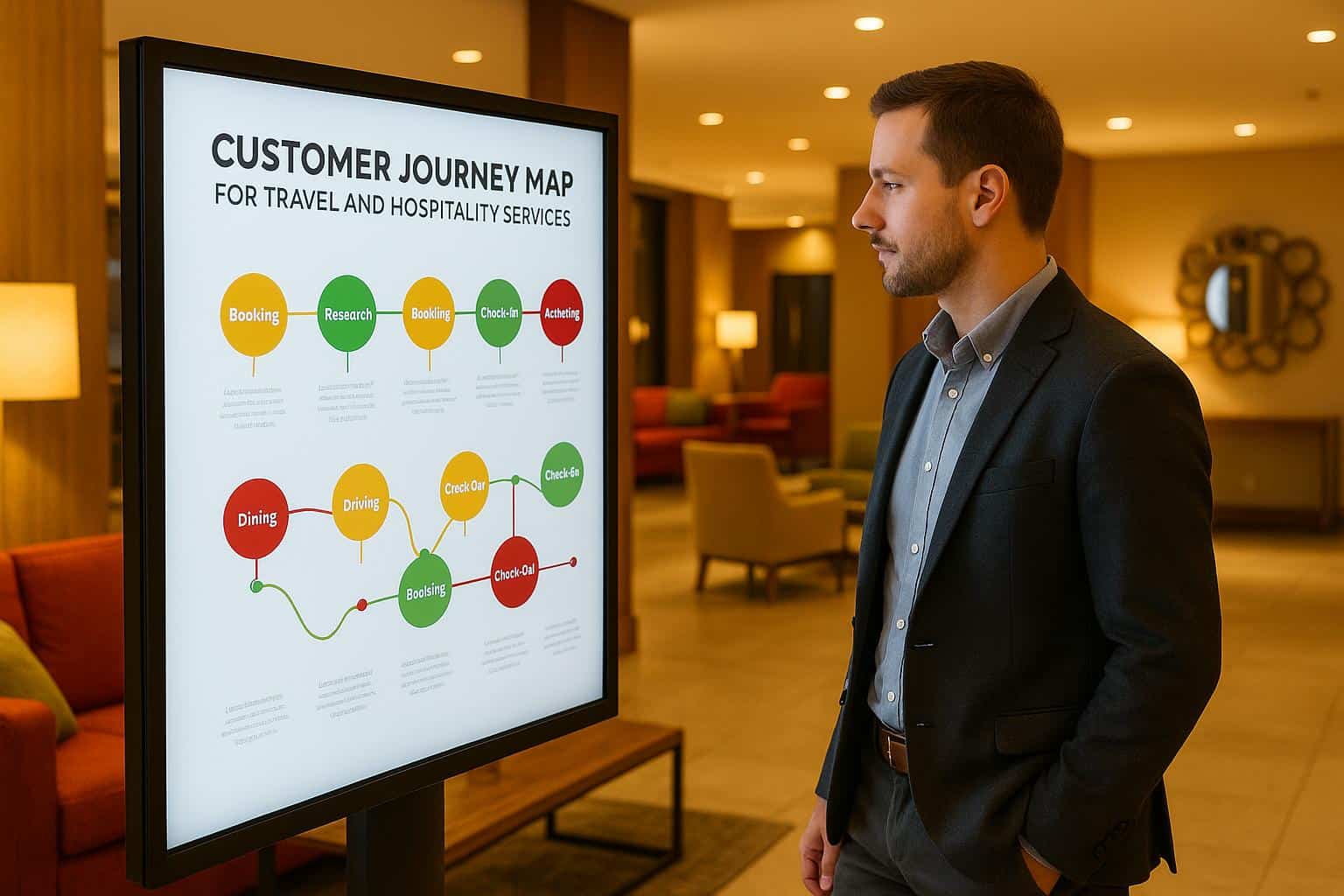
How to Create a Customer Journey Map for Travel and Hospitality Services
The article "How to Create a Customer Journey Map for Travel and Hospitality Services" provides a comprehensive guide tailored to the unique needs of the travel and hospitality industry. It explains that a customer journey map traces a guest’s experience from initial research and booking through arrival, stay, check-out, and post-stay engagement. The guide emphasizes the importance of defining guest personas based on factors like travel purpose, booking source, or traveler type to capture diverse experiences. It outlines key stages of the customer journey including pre-trip planning, travel and on-site experiences, and post-trip phases, highlighting essential touchpoints such as website interactions, booking engines, check-in processes, accommodation, dining, activities, and feedback collection. The article also discusses identifying pain points and moments of truth to improve guest satisfaction and loyalty. It recommends involving stakeholders from various departments in journey mapping sessions and using tools like spreadsheets, diagrams, or specialized software to visualize the journey. Additionally, it covers aligning the journey map with business goals to enhance marketing strategies, increase direct bookings, and optimize guest experiences. Real-world examples and best practices are included to help travel and hospitality businesses create actionable, industry-specific customer journey maps that drive improved customer experience and business outcomes.
Business Type
Travel and Hospitality Services
Industry
Travel and Hospitality Services
Key Stages of the Customer Journey
- Dreaming/Inspiration
- Planning/Research
- Booking
- Pre-Arrival
- Arrival
- Stay/Experience
- Departure/Checkout
- Post-Stay Engagement
Essential Touchpoints to Map
- Responsive and informative hotel website (including mobile-friendly and SEO optimized)
- Engaging social media presence (Facebook, Instagram, Pinterest, Snapchat)
- Personalized guest welcome emails
- Customized marketing and upselling offers (room upgrades, packages, late check-out, transportation)
- Online booking platforms and online travel agencies (OTAs)
- Pre-arrival communication and AI-driven personalized experiences
- Arrival experience including airport transfers and check-in process
- Accommodation and dining experiences
- Sightseeing and activity bookings
- Customer support and real-time assistance during stay
- Checkout and departure process (including automated checkout and last-minute offers)
- Post-stay engagement (feedback surveys, loyalty programs, review requests, social media sharing)
Common Pain Points
- Complex and fragmented booking processes causing frustration and abandoned bookings.
- Lack of personalized experiences tailored to different traveler personas (e.g., business vs leisure, solo vs family).
- Broken or confusing booking links and errors leading to failed reservations.
- Difficulties in navigating arrival and transportation logistics at unfamiliar destinations.
- Long check-in queues and inefficient check-in procedures.
- Inadequate communication before arrival leading to uncertainty or missed information.
- Unresponsive or poor customer service during the stay affecting guest satisfaction.
- Limited accessibility or usability of in-room technology and hotel amenities.
- Challenges with dining and accommodation options not meeting diverse guest needs.
- Long lines, expensive tickets, and limited availability at sightseeing and activities.
- Post-stay engagement gaps, including insufficient follow-up on feedback and reviews.
- Missed opportunities for upselling and personalized offers during the journey.
- Inconsistent experience across different touchpoints and channels.
- High customer expectations leading to dissatisfaction after any negative experience.
Target Audience
- Travel agencies and tour operators
- Travel and hospitality service providers
- Customer experience managers in travel and tourism
- Marketing professionals in travel and hospitality
- Product managers in travel technology companies
- Business strategists in travel and tourism
- Customer insights and service design teams
- Small to large travel businesses aiming to improve customer experience
Target Audience
- Travel agencies and tour operators
- Travel and hospitality service providers
- Customer experience managers in travel and tourism
- Marketing professionals in travel and hospitality
- Product managers in travel technology companies
- Business strategists in travel and tourism
- Customer insights and service design teams
- Small to large travel businesses aiming to improve customer experience
Recommended Tools for Journey Mapping
- Smaply
- Dovetail
- Contentsquare Customer Journey Analysis
- Operto Property Management System
- Google Travel Insights
Available Templates
- Travel and Tourism Customer Journey Map template by UXPressia ([uxpressia.com](https://uxpressia.com/templates/travel-and-tourism))
- Vacation Travel Customer Journey Map template by Custellence ([custellence.com](https://www.custellence.com/vacation-travel-customer-journey-map-template))
Real-World Examples
Real-world examples of customer journey maps for travel and hospitality services illustrate the detailed stages and touchpoints a traveler experiences from initial interest to post-stay engagement. For instance, SiteMinder’s hotel customer journey highlights key stages such as Dreaming, Planning, Booking, Experiencing, and Sharing, emphasizing the importance of influencing travelers during micro-moments like browsing social media, reading reviews, and booking through OTAs or hotel websites. They provide tactics such as leveraging Instagram, optimizing OTA profiles, and publishing engaging content to capture traveler attention early in the journey.
Smaply offers a comprehensive hotel guest journey map example that includes phases like Awareness, Consideration, Booking, Arrival, Stay, Check-out, and Post-Stay Engagement. This map visualizes guest emotions, actions, and pain points at each stage, such as long check-in queues or unresponsive service, and suggests solutions like mobile check-in to improve satisfaction.
Custellence provides a vacation travel customer journey map template that segments the journey into customer lanes, on-stage touchpoints, and back-stage opportunities, allowing businesses to tailor the map to their specific service offerings such as hotels, travel agencies, or spas. It encourages mapping emotional states and evidence-based insights to better understand customer needs.
UXPressia offers various travel and tourism customer journey map templates for hotels, airlines, and travel agencies, including detailed personas and empathy maps to optimize client experiences.
Operto’s 2025 guide to the hotel guest journey breaks down the process into eight stages: Dreaming, Planning, Booking, Pre-Arrival, Arrival, Stay, Departure, and Post-Stay Engagement. Each stage includes specific touchpoints and emotional mapping, such as personalized pre-arrival emails, digital check-in, and follow-up communications to maintain guest relationships.
Together, these examples demonstrate best practices in mapping the travel and hospitality customer journey by focusing on key touchpoints, emotional experiences, pain points, and actionable tactics to enhance guest satisfaction and business outcomes. They provide practical frameworks and templates that travel and hospitality businesses can adapt to create effective, customer-centric journey maps.
Best Practices
Creating and using customer journey maps in travel and hospitality services involves several actionable best practices to enhance guest experience and business outcomes:
- Define Clear Guest Personas: Identify distinct guest types based on travel purpose (business, leisure), group composition (solo, family, couples), booking sources (direct, OTAs), and preferences. Use guest feedback and reviews to refine these personas.
- Map Key Journey Stages: Structure the map around critical phases: Awareness (discovery and inspiration), Consideration (research and evaluation), Booking (decision and reservation), Arrival and Check-in, Stay (experience and services), and Post-Stay Engagement (feedback and loyalty).
- Identify Touchpoints and Pain Points: For each stage and persona, detail all interaction points including online (website, OTAs, social media, email) and offline (check-in desk, room service, amenities). Highlight moments of truth where guest satisfaction can be won or lost.
- Engage Cross-Functional Stakeholders: Involve teams from marketing, front desk, operations, and guest services in journey mapping workshops to ensure comprehensive insights and alignment.
- Leverage Technology and Data: Incorporate data from booking engines, CRM, PMS, reputation management, and guest feedback tools to understand behaviors and identify friction points.
- Visualize and Communicate the Journey: Use diagrams, spreadsheets, or digital tools to create clear, accessible maps that can be shared across the organization to drive guest-centric improvements.
- Regularly Update the Journey Map: Review and revise the map at least biannually or when significant changes occur (new services, rebranding) to keep it relevant and actionable.
- Focus on Personalization and Differentiation: Use insights from the journey map to tailor communications, offers, and services that meet specific guest needs and create memorable experiences.
- Align Journey Mapping with Business Goals: Ensure the map supports objectives like increasing direct bookings, improving guest satisfaction scores, and boosting loyalty program engagement.
- Use Journey Maps to Identify Opportunities: Pinpoint upselling moments, streamline processes, and address pain points to enhance overall guest satisfaction and operational efficiency.
By following these best practices, travel and hospitality businesses can create effective customer journey maps that drive superior guest experiences, foster loyalty, and improve competitive positioning in a dynamic market. (hoteltechreport.com, siteminder.com, mize.tech, sailtech.ai)
Tips for Aligning Journey Maps with Business Goals
To align customer journey maps with business goals and customer needs in travel and hospitality services, start by clearly defining your business objectives and the specific goals for the customer experience at each stage of the journey. Use data-driven insights to understand traveler behaviors, preferences, and pain points across key stages such as dreaming, planning, booking, arrival, stay, departure, and post-stay engagement. Tailor your journey map to highlight critical touchpoints where your business can influence decisions, such as optimizing your online presence, streamlining booking processes, personalizing guest experiences using AI, and enhancing on-site services. Continuously gather and analyze guest feedback to identify gaps and opportunities for improvement, ensuring your services meet evolving customer expectations. Incorporate real-time data and technology integrations to provide seamless, personalized experiences that foster loyalty and positive word-of-mouth. Finally, ensure your journey map reflects the unique characteristics of your property and target market, enabling your team to deliver consistent, memorable experiences that drive bookings, satisfaction, and long-term business growth. This approach ensures your customer journey map is a practical tool that directly supports your strategic business goals while centering on the needs and desires of your guests.