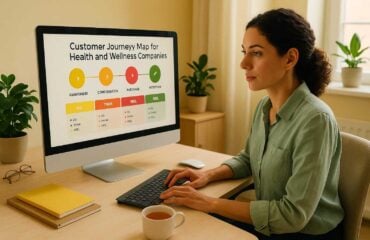
How to Create a Customer Journey Map for Healthcare
"How to Create a Customer Journey Map for Healthcare" is a comprehensive guide designed to help healthcare organizations visualize and improve the patient experience by mapping the entire patient journey—from initial awareness of symptoms to ongoing care and long-term management. The guide covers key stages of the patient journey, including awareness, seeking information, first contact, care delivery, treatment, post-visit behavioral changes, and ongoing care, highlighting the emotional intensity, complexity, and regulatory considerations unique to healthcare.
It emphasizes identifying essential touchpoints such as patient interactions with healthcare providers, diagnostic procedures, treatment activities, and follow-up care, while pinpointing pain points and gaps that affect patient satisfaction and outcomes. The guide outlines the benefits of patient journey mapping, including enhanced patient-centered care, improved communication, resource optimization, and seamless transitions across care stages.
The article provides step-by-step instructions for creating patient journey maps, including engaging multiple stakeholders, establishing patient personas and segments, collecting qualitative and quantitative data, and using tools and templates to visualize the journey effectively. It discusses different types of journey maps—current state, future state, day in the life, and service blueprints—each serving distinct purposes from incremental improvements to strategic planning.
Real-world examples illustrate how mapping can empower patients and healthcare teams, such as improving post-operative care instructions or designing digital health applications that consider patients’ emotional states. Best practices include continuous feedback integration, interdisciplinary collaboration, cultural competency, and leveraging technology for patient engagement and communication.
Overall, this guide equips healthcare professionals with actionable insights and practical frameworks to tailor customer journey maps to their specific contexts, ultimately driving better patient experiences, satisfaction, and health outcomes."
Business Type
Healthcare
Industry
Healthcare
Key Stages of the Customer Journey
- Awareness – Patient identifies a need for care and begins searching for healthcare providers.
- Consideration – Patient weighs options, considers referrals, coverage, recommendations, and interacts with healthcare information channels.
- Access – Patient decides to schedule services and engages directly with the healthcare organization through various communication channels.
- Service Delivery – Clinical care is provided including visits, check-in/out, admission, discharge, and billing.
- Ongoing Care – Patient engagement continues after service delivery, including wellness, care management, and long-term support.
Essential Touchpoints to Map
- Symptom recognition and awareness of healthcare needs
- Online search and website interaction for provider information
- Phone call, chatbot, or other communication for inquiries
- Appointment scheduling and confirmation
- Check-in and registration at healthcare facility
- Waiting room experience
- Clinical interaction with healthcare providers (doctors, nurses, specialists)
- Billing and payment processing
- Follow-up care and ongoing patient engagement
- Patient education and information delivery
- Patient feedback and review submission
- Referral and recommendation processes
- Discharge and aftercare instructions
Common Pain Points
- Emotional stress and uncertainty during recovery and post-discharge periods, leading to frustration and mistrust.
- Communication gaps between patients and healthcare providers, causing confusion and inconsistent information.
- Poor coordination among multiple healthcare stakeholders, resulting in fragmented care experiences.
- Inconsistent or lack of follow-up after appointments or treatments, leading to patient disengagement or loss.
- Barriers related to technology usability, especially when patients are in vulnerable emotional states.
- Difficulties in navigating complex healthcare systems and processes, causing patient frustration.
- Gaps in patient education and information availability, hindering informed decision-making.
- Challenges in maintaining continuous care and proactive health management between clinical visits.
- Inadequate personalization of patient interactions and outreach, reducing engagement and satisfaction.
- Operational inefficiencies that negatively impact patient satisfaction and outcomes.
Target Audience
- Healthcare professionals involved in patient experience and engagement
- Healthcare administrators and managers in hospitals and clinics
- Healthcare marketers and patient outreach coordinators
- Healthcare IT and digital transformation teams
- Healthcare UX/UI designers and researchers
- Healthcare consultants specializing in patient journey and experience
- Healthcare startups and digital health application developers
- Enterprise healthcare organizations seeking to improve patient satisfaction
- Patient experience analysts and data specialists
- Healthcare providers aiming to align services with patient needs
Target Audience
- Healthcare professionals involved in patient experience and engagement
- Healthcare administrators and managers in hospitals and clinics
- Healthcare marketers and patient outreach coordinators
- Healthcare IT and digital transformation teams
- Healthcare UX/UI designers and researchers
- Healthcare consultants specializing in patient journey and experience
- Healthcare startups and digital health application developers
- Enterprise healthcare organizations seeking to improve patient satisfaction
- Patient experience analysts and data specialists
- Healthcare providers aiming to align services with patient needs
Recommended Tools for Journey Mapping
- Qualtrics Experience Management Platform
- UXPressia Healthcare Journey Mapping Tool
- TheyDo Patient Journey Mapping Tool
Available Templates
- Hyro’s patient journey mapping involves a 6-step process that can be used as a framework template: 1) Identify and segment your target audience, 2) Collect actionable data, 3) Create personas, 4) Map the patient journey visually through key touchpoints, 5) Analyze and identify pain points, 6) Implement improvements using conversational AI. This stepwise approach acts as a practical template for healthcare journey mapping. ([hyro.ai](https://www.hyro.ai/blog/patient-journey-mapping-how-to))
- Qualtrics describes four types of patient journey maps that serve as templates or frameworks: Current State (mapping what patients do, think, and feel today), Future State (ideal patient journey), Day in the Life (focused on specific patient personas and experiences), and Service Blueprint (adds layers of systems, processes, and policies to the journey map). These four types provide structured templates for healthcare journey mapping. ([qualtrics.com](https://www.qualtrics.com/experience-management/industry/patient-journey-mapping))
- Emids recommends a 4-step approach to building a patient journey map as a template: 1) Map your initial scenario with high-level processes and stakeholders, 2) Add qualitative data from patient research, 3) Add quantitative data and analytics, 4) Visualize the journey map clearly to highlight pain points and opportunities. This approach is a recommended template for healthcare journey mapping. ([emids.com](https://www.emids.com/insights/healthcare-customer-journey-mapping))
Real-World Examples
A detailed real-world example from the Smaply blog highlights the Kangaroo Mother Care (KMC) project in rural Uttar Pradesh, India, led by the Community Empowerment Lab (CEL) in collaboration with the National Health Mission. The project aimed to scale KMC, a method involving skin-to-skin contact and breastfeeding for preterm and low-weight newborns, to reduce infant mortality. The journey mapping process involved diverse stakeholders including mothers, nurses, doctors, community health workers, and family members. The team created stakeholder maps, personas, and detailed journey maps that captured the experiences and emotional journeys of mothers giving birth and nurses providing care in health facilities. This holistic approach revealed key pain points such as mistrust in health institutions and gaps in respectful care, and emphasized empathy as a critical success factor. The insights led to new products and processes to improve service delivery and strengthen the health system, with nurses playing a pivotal role in KMC adoption and mother-newborn care.
In the pharmaceutical industry, companies like Novartis, Pfizer, and Roche have successfully implemented customer journey management strategies to enhance patient and healthcare professional (HCP) experiences. Novartis developed AI-driven digital patient support tools such as chatbots and AI nurses to assist patients with chronic conditions, improving medication adherence and emotional support. Pfizer adopted an omnichannel approach integrating webinars, AI chatbots, and personalized communications to engage HCPs effectively. Roche invested in patient journey mapping in oncology to identify critical pain points and introduced support programs that enhanced patient access to care. These examples demonstrate the power of journey mapping to improve patient outcomes, operational agility, and business performance in Pharma.
A telehealth case overview shared by UXPressia emphasized the importance of aligning customer journey mapping with process improvement to create seamless experiences. The speaker, Brenda Batista-Mollohan, discussed identifying customer pain points, utilizing KPIs, and engaging stakeholders through cross-functional meetings. The case underscored the need for pragmatic patient journey mapping approaches, use of templates, and continuous stakeholder engagement to scale journey mapping initiatives effectively in healthcare settings.
These examples collectively provide actionable insights and best practices for creating customer journey maps tailored to healthcare, emphasizing stakeholder involvement, empathy, data-driven personalization, and alignment with business goals to improve patient and provider experiences.
Best Practices
Creating and using customer journey maps in healthcare involves several actionable best practices to effectively enhance patient experience and operational efficiency:
- Understand the Unique Nature of Healthcare Journeys: Recognize that patient journeys are emotionally intense, complex, and involve multiple stakeholders and regulatory considerations. This requires a tailored approach different from other industries.
- Identify Key Stages and Touchpoints: Map out critical stages such as awareness, consideration, access, service delivery, and ongoing care. Highlight essential touchpoints where patients interact with healthcare providers and systems.
- Engage Multiple Stakeholders: Involve healthcare professionals across departments, including clinicians, administrative staff, and patients themselves, to gather diverse insights and ensure comprehensive mapping.
- Use Qualitative and Quantitative Data: Combine observational data, patient feedback, and operational metrics to create a robust, evidence-based journey map.
- Create Detailed Patient Personas: Segment patients by demographics, health conditions, and behaviors to tailor journey maps that reflect varied patient needs and experiences.
- Visualize Emotional and Practical Experiences: Illustrate not only the steps patients take but also their emotional states, pain points, and barriers to care to identify areas for improvement.
- Iterate and Validate the Map: Present the journey map to stakeholders for feedback and continuously refine it to reflect real patient experiences and organizational changes.
- Align Journey Maps with Business and Care Goals: Ensure maps support patient-centered care, improve communication, streamline access, and enhance care coordination.
- Leverage Technology and Tools: Utilize journey mapping software and platforms that integrate patient data and feedback to create dynamic, actionable maps.
- Focus on Continuous Improvement: Use journey maps to identify gaps, inefficiencies, and opportunities for innovation, fostering a culture of ongoing enhancement in patient experience.
- Address Emotional Support and Cultural Competency: Incorporate strategies to support patients emotionally and respect cultural differences throughout their healthcare journey.
- Incorporate Real-World Examples and Templates: Use case studies and ready-made templates to guide the mapping process and inspire practical applications.
By following these best practices, healthcare organizations can develop effective patient journey maps that reveal critical insights, improve patient satisfaction, and drive meaningful improvements in healthcare delivery.
Tips for Aligning Journey Maps with Business Goals
To effectively align patient journey maps with business goals and customer needs in healthcare, start by involving a cross-functional team of stakeholders including clinical staff, administrative personnel, and patients to ensure diverse perspectives and comprehensive understanding. Clearly define objectives that tie directly to organizational goals such as improving patient satisfaction, reducing wait times, or enhancing care coordination. Map all patient touchpoints meticulously to identify pain points and friction areas that impact the patient experience and operational efficiency. Use patient personas and segmentations to tailor the journey maps to specific patient groups, reflecting their unique needs and preferences. Incorporate real patient feedback and operational data to validate and refine the maps continuously. Align content and communication strategies with the journey stages to provide timely, relevant information that empowers patients and builds trust. Train staff on the journey map insights to foster a patient-centered culture and ensure consistent experience delivery. Finally, prioritize improvements based on impact and effort analyses linked to key performance indicators, enabling strategic resource allocation and continuous enhancement of both patient experience and business outcomes. This holistic approach ensures that patient journey mapping drives meaningful improvements aligned with both patient needs and healthcare organization goals.