

How to Create a Customer Journey Map for B2C
Creating a customer journey map for B2C businesses involves designing intuitive, fast, and engaging customer experiences that allow consumers to transition seamlessly between online and offline channels. Unlike B2B journeys, B2C journeys focus on quick conversions and immediate sales, catering to individual customers who make faster decisions.
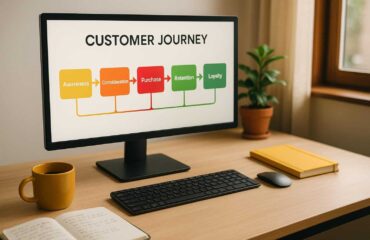
Key Stages of the B2C Customer Journey:
- Awareness: Customers become familiar with your brand through broad yet personalized campaigns.
- Consideration: Customers review options and compare products or services.
- Purchase: Customers make buying decisions quickly, often valuing convenience.
- Retention: Efforts to keep customers satisfied and engaged post-purchase.
- Advocacy: Loyal customers who promote your brand to others.
Essential Touchpoints and Pain Points:
- Touchpoints include ads, social media, emails, push notifications, website interactions, and customer service.
- Pain points often involve irrelevant messaging, poor timing, abandoned carts, and friction in onboarding or purchase processes.
Tools and Templates:
- Use customer journey map templates tailored for B2C to visualize stages and touchpoints.
- Employ data-driven tools to gather solicited (surveys, interviews) and unsolicited data (website behavior, social media mentions).
Real-World Examples and Best Practices:
- Avoid generic messaging by segmenting customers based on behavior and preferences.
- Map customer journeys that are fast and simple to match the B2C buying pace.
- Use omnichannel strategies to engage customers at multiple points and cycle them back if needed.
Tips for Aligning Journey Maps with Business Goals and Customer Needs:
- Establish a customer-centric approach by understanding customer emotions and pain points.
- Improve customer experience by identifying and addressing friction points.
- Increase ROI by deploying the right channel at the right time.
- Reduce abandonment by analyzing drop-off points and fixing issues.
- Streamline onboarding to remove blockers.
- Use detailed customer data to make informed decisions.
- Gain competitive advantage by delivering superior customer experiences.
This approach ensures B2C brands create actionable, practical frameworks that improve customer engagement, satisfaction, and loyalty, ultimately driving business success.
Business Type
B2C
Industry
B2C (Business to Consumer)
Key Stages of the Customer Journey
- Awareness
- Consideration
- Decision (First Purchase)
- Retention (Loyalty)
- Advocacy
Essential Touchpoints to Map
- Social media ads (Facebook, Instagram, TikTok) — initial brand awareness
- Display/banner retargeting ads — remarketing and reinforcement
- Organic search and SEO-optimized content (blogs, how-to guides) — discovery and education
- Website product pages — detailed information and decision support
- Live chat and chatbots — on-site real-time assistance during consideration
- Email marketing (newsletters, drip campaigns) — nurturing consideration
- Mobile push notifications — timely re-engagement and reminders
- SMS messaging — direct, personalized offers and updates
- User reviews and ratings — social proof during consideration and decision
- Promotional offers and discount pop-ups — conversion incentives
- Checkout process (guest checkout, multiple payment options) — frictionless purchase
- Order confirmation and shipping notifications — post-purchase reassurance
- Loyalty programs and referral invitations — retention and advocacy
- Customer feedback surveys — post-purchase engagement and continuous improvement
Common Pain Points
- Support Pain Points: Long wait times, unhelpful or inconsistent customer support, difficulty reaching support channels leading to customer frustration.
- Productivity Pain Points: Customers experiencing delays or inefficiencies such as confusing user interfaces, repetitive tasks, or slow processes that hinder their goals.
- Financial Pain Points: Issues related to cost, unexpected fees, limited payment options, or perceived poor value affecting customer satisfaction.
- Process Pain Points: Confusing navigation, complicated checkout processes, inconsistent information, and convoluted return or resolution procedures.
- Discovery and Navigation Challenges: Difficulty finding products due to poor site architecture, SEO, or filtering options.
- Product Evaluation Friction: Lack of detailed product information, images, reviews, or FAQs causing hesitation.
- Cart Abandonment and Checkout Frustrations: Lengthy forms, unexpected costs, limited payment methods, and lack of guest checkout options.
- Delivery and Fulfillment Issues: Delayed shipping, lack of tracking information, damaged goods, and inflexible delivery options.
- Post-Purchase Support and Returns: Difficulties with customer service, complex return policies, and slow refund processing.
- Ineffective Communication: Lack of timely updates, unclear information, and poor transparency eroding customer trust.
- Technical Glitches: Website crashes, slow loading times, and app malfunctions disrupting the shopping experience.
- Feeling Ignored or Unvalued: Generic interactions, lack of personalization, and ignoring customer feedback leading to dissatisfaction.
Target Audience
- Marketing professionals
- Customer experience (CX) managers
- Product managers
- Customer success teams
- Sales teams
- Support teams
- B2C business owners and executives
- Large and complex organizations
- Startups and small to medium-sized B2C companies
- Professionals involved in customer journey mapping and customer insights
- Teams seeking to align around customer needs and improve customer experience
Target Audience
- Marketing professionals
- Customer experience (CX) managers
- Product managers
- Customer success teams
- Sales teams
- Support teams
- B2C business owners and executives
- Large and complex organizations
- Startups and small to medium-sized B2C companies
- Professionals involved in customer journey mapping and customer insights
- Teams seeking to align around customer needs and improve customer experience
Recommended Tools for Journey Mapping
- Lucidchart
- FigJam
- InDesign CC
- Totango
- Smaply
- Canvanizer
- Reveall
- A Whiteboard
- Microsoft PowerPoint
- Gliffy
- Aiava
- Custellence
- Flowmapp
- JourneyTrack
- ShiftX
- Theydo
- UXPressia
- Hotjar
- Google Analytics 4
- Heap
Available Templates
- Canva offers customer journey map templates accessible via their online whiteboard platform, including collaborative and visually engaging templates suitable for mapping customer stages, touchpoints, pain points, and emotional responses. Example templates include colorful brainstorm whiteboards and online journey mapping boards.
- Zendesk provides free downloadable customer journey map templates in Google Slides format, designed to cover all stages of the customer journey from awareness to advocacy, with a focus on customer-centric visualization and actionable insights.
- WordStream offers a free, editable customer journey map template in Google Sheets format that breaks down the buyer’s journey into stages such as awareness, consideration, decision, service, and retention, including sections for touchpoints, pain points, customer emotions, and actions to take.
Real-World Examples
Spotify’s B2C customer journey map focused on improving the music-sharing experience by mapping the user journey from opening the app to liking a shared song, identifying pain points and enhancing engagement to boost customer satisfaction and loyalty. TurboTax created a customer journey map for their Personal Pro product using data research and customer surveys to understand the tax filing experience, allowing them to address pain points and improve customer satisfaction. Columbia Road, an e-commerce agency, developed a customer journey map template for a fictitious online grocery shop, including core activities, goals, touchpoints, and KPIs to optimize the decision-making process and customer experience. Amazon’s complex customer journey map breaks down the customer conversion funnel with success metrics like impressions, CTR, add to cart, conversion rate, and repeat purchase rates, helping to maximize customer engagement and ROI. Rail Europe’s B2C journey map covers interactions before, during, and after a trip, illustrating a non-linear buyer journey with insights into customer frustrations and preferences, enabling targeted improvements across marketing, design, and support teams. These examples highlight the importance of mapping key stages, touchpoints, customer emotions, and metrics to create actionable insights that improve the B2C customer experience and business outcomes.
Best Practices
Creating and using customer journey maps for B2C businesses involves several actionable best practices to ensure the map is effective, customer-centric, and aligned with business goals:
- Simplify the Journey for Quick Decision-Making: B2C customers often make fast purchase decisions. Streamline the journey by minimizing unnecessary steps and reducing friction to create a smooth path to purchase.
- Optimize Digital Touchpoints: Since B2C journeys frequently occur online, focus on optimizing key digital interactions such as website navigation, mobile experience, and checkout processes to enhance conversion rates.
- Use Personalization to Increase Engagement: Tailor content, product recommendations, and messaging based on customer behavior and preferences to create a more engaging and relevant experience.
- Incorporate Social Proof: Leverage reviews, testimonials, and user-generated content at critical decision points to build trust and influence purchase decisions.
- Involve Cross-Functional Teams: Collaborate across marketing, sales, customer service, and product teams to create a holistic and accurate journey map that reflects all customer touchpoints.
- Leverage Data-Driven Insights: Use a mix of solicited data (surveys, interviews) and unsolicited data (website analytics, social media mentions) to inform the map with real customer behaviors and emotions.
- Regularly Update the Journey Map: Customer preferences and behaviors evolve, so revisit and update the map periodically to keep it relevant and actionable.
- Focus on Customer Emotions: Map the emotional states of customers at each touchpoint to identify pain points and moments of delight, enabling targeted improvements.
- Define Clear Objectives: Start by setting measurable goals for the journey map that align with broader business objectives such as reducing churn or improving onboarding.
- Identify Target Personas: Develop detailed customer personas based on real data to tailor the journey map to distinct customer segments with unique needs and behaviors.
- Map Out All Touchpoints: Include every possible interaction across online and offline channels, ensuring no critical touchpoint is overlooked.
- Conduct Customer Research: Deep dive into customer motivations and challenges using surveys, interviews, and behavioral analytics to enrich the map.
- Highlight Pain Points and Opportunities: Identify friction points and prioritize areas that impact conversion and retention the most.
- Visualize the Customer Journey: Use clear visuals, color coding, and an easy-to-read format to make the map accessible and actionable for all stakeholders.
- Validate the Map With Stakeholders: Get feedback from internal teams to ensure accuracy and buy-in, and be open to revising the map.
- Implement Changes Based on Insights: Use the journey map to guide targeted improvements in marketing, sales, and customer service strategies.
- Continuously Monitor and Improve: Treat the journey map as a living document, regularly reviewing and refining it to adapt to changing customer behaviors and business goals.
Following these best practices helps B2C businesses create customer journey maps that not only visualize the customer experience but also drive meaningful improvements in engagement, satisfaction, and loyalty.
Tips for Aligning Journey Maps with Business Goals
To align B2C customer journey maps with business goals and customer needs, start by clearly defining the journey’s scope and target persona to ensure focus and relevance. Collect both qualitative and quantitative customer data from multiple sources to gain deep insights into customer behaviors, emotions, and pain points. Map key journey stages, touchpoints, and emotional highs and lows based on real customer behaviors, ensuring the map reflects actual customer experiences. Validate the journey map with internal stakeholders and customers to gain alignment and uncover any gaps. Use the journey map to eliminate blind spots, boost team efficiency, and prioritize high-impact opportunities that drive loyalty and growth. Regularly update the journey map to reflect changes in customer behavior, market conditions, and business objectives. Incorporate performance metrics and customer feedback to continuously optimize the journey. Leverage technology and automation tools to scale and personalize customer interactions. Finally, ensure the journey map educates and aligns internal teams around customer needs, helping to secure executive support and resource allocation for customer experience improvements. This approach ensures the journey map is actionable, customer-centric, and directly tied to measurable business outcomes, fostering stronger customer relationships and business growth. (TheyDo, Adobe Business, InMoment)