For years, the mantra for B2B SaaS startups was “growth at all costs.” Venture capital flowed freely, rewarding companies that could rapidly acquire new customers, even if the underlying economics were inefficient. That era is over. The market has fundamentally shifted, and investors now prioritize sustainable, efficient growth over mere expansion. In this new paradigm, understanding and optimizing your Customer Acquisition Cost (CAC) payback period is not just a financial exercise—it is a critical determinant of survival and success.
This article provides a data-driven analysis for CEOs, CMOs, and executive teams at scaling tech startups. We will dissect the latest benchmarks, explore real-world case studies, and offer strategic guidance, relying exclusively on authoritative data from 2023-2025 to help you navigate the path to profitability.
The Great Correction: A Market Pivot to Profitability
The macroeconomic environment has forced a significant correction in the SaaS landscape. The focus has pivoted from aggressive, often inefficient, growth to a more balanced model where profitability and cash efficiency are paramount. Data from the Benchmarkit 2025 SaaS Performance Metrics Report clearly illustrates this shift. While top-quartile growth rates have declined, companies are increasingly relying on revenue from their existing customer base to fuel expansion.
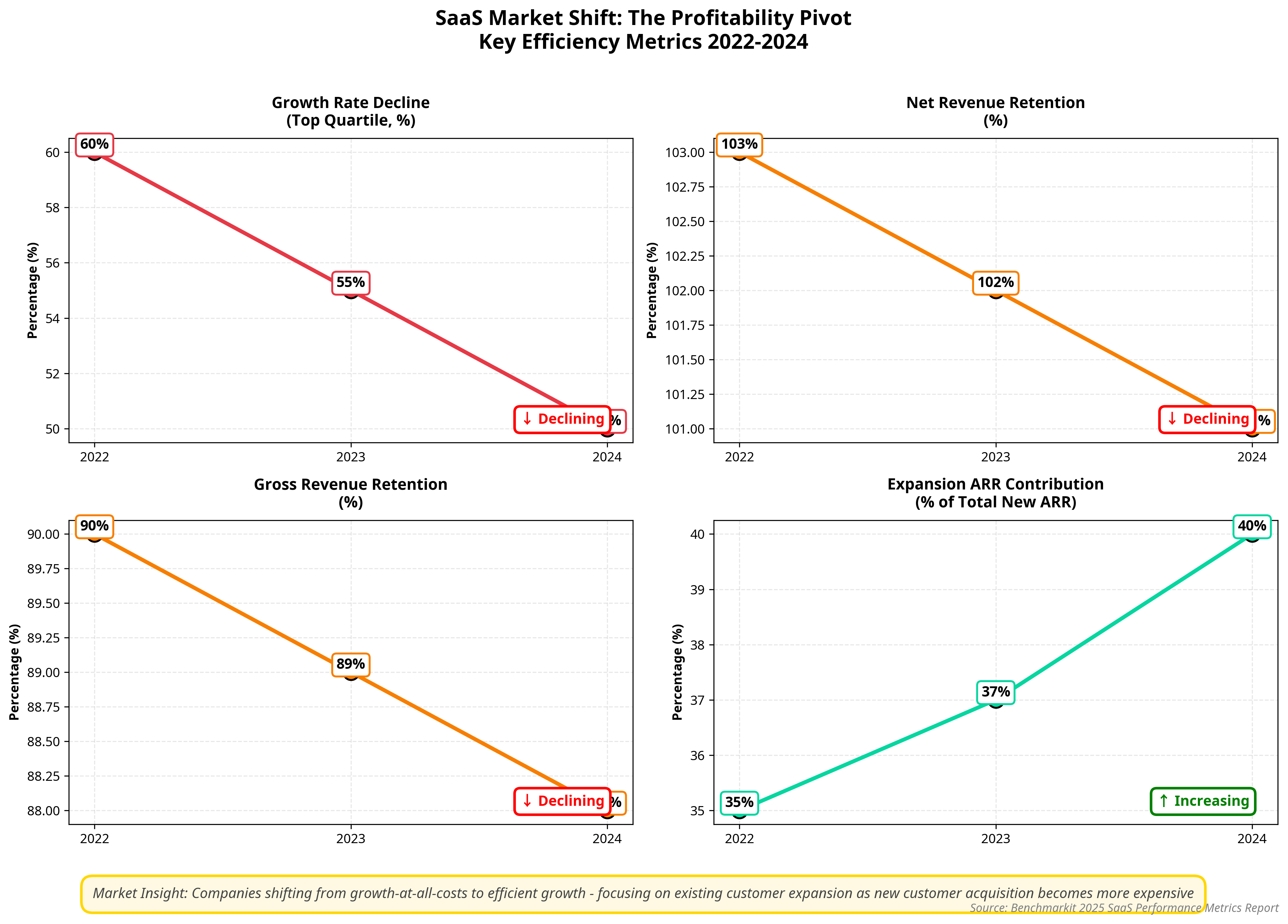
As the chart above demonstrates, while growth and retention metrics are facing headwinds, the contribution from Expansion ARR has steadily increased, now accounting for 40% of all new revenue. This signals a crucial strategic pivot: with new customer acquisition becoming more expensive and challenging, the most resilient companies are those that can effectively monetize their existing relationships through upselling and cross-selling.
Table of Contents
The Sobering Reality: CAC Payback Periods Are Getting Longer
One of the most telling indicators of the current market is the lengthening of the median CAC payback period. After a period of relative efficiency in 2023, the time it takes for a SaaS company to recoup its acquisition costs has increased significantly.
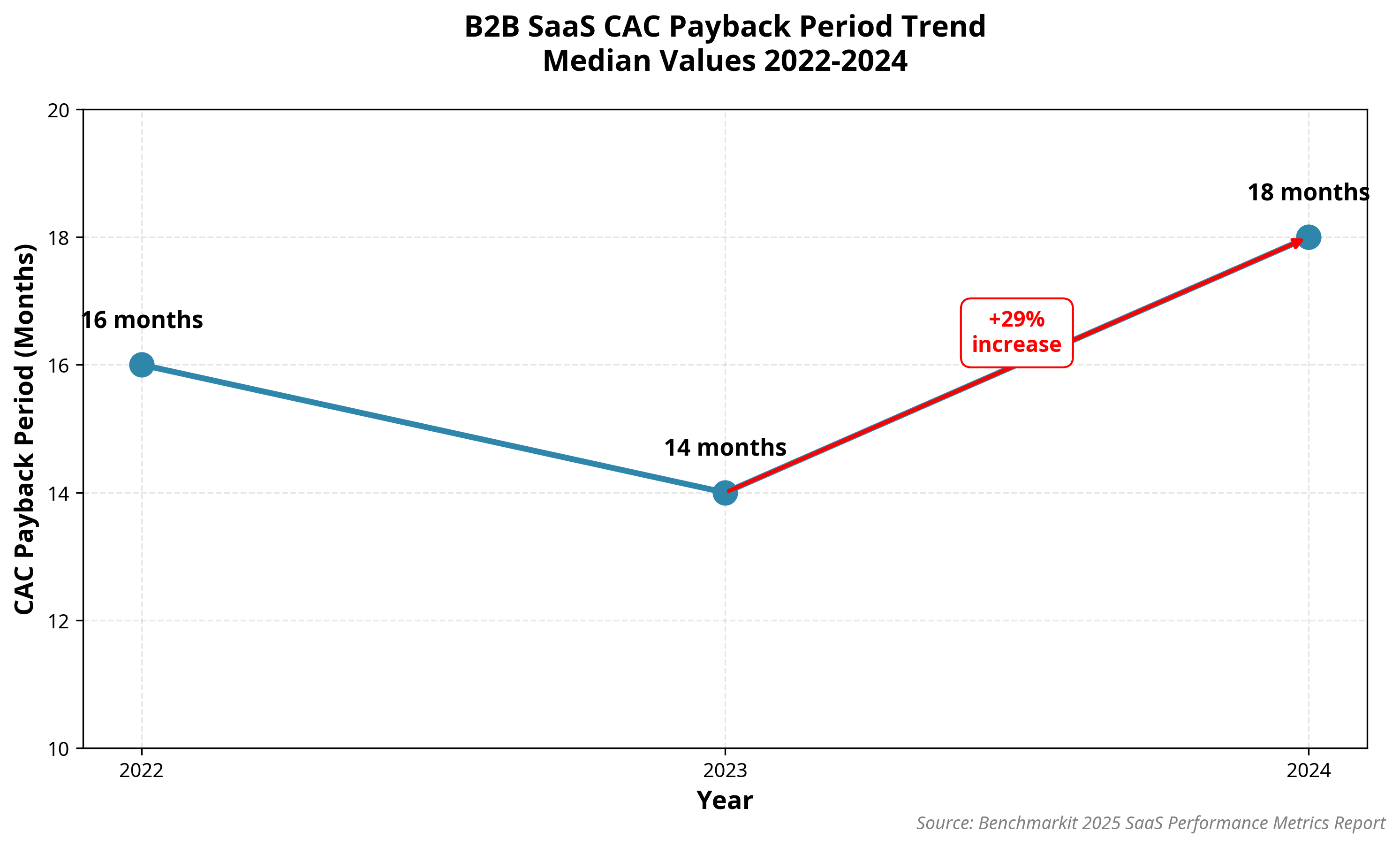
According to the latest industry benchmarks, the median CAC payback period for B2B SaaS companies jumped from 14 months in 2023 to 18 months in 2024—a staggering 29% increase in just one year [1]. This trend underscores the growing inefficiency in go-to-market strategies and the rising costs associated with acquiring new customers. For startups, this means that capital is tied up for longer, putting a strain on cash flow and delaying the ability to reinvest in further growth.
This deterioration is further evidenced by the New Customer CAC Ratio, which measures the sales and marketing (S&M) cost to acquire one dollar of new Annual Recurring Revenue (ARR). This ratio has worsened considerably.
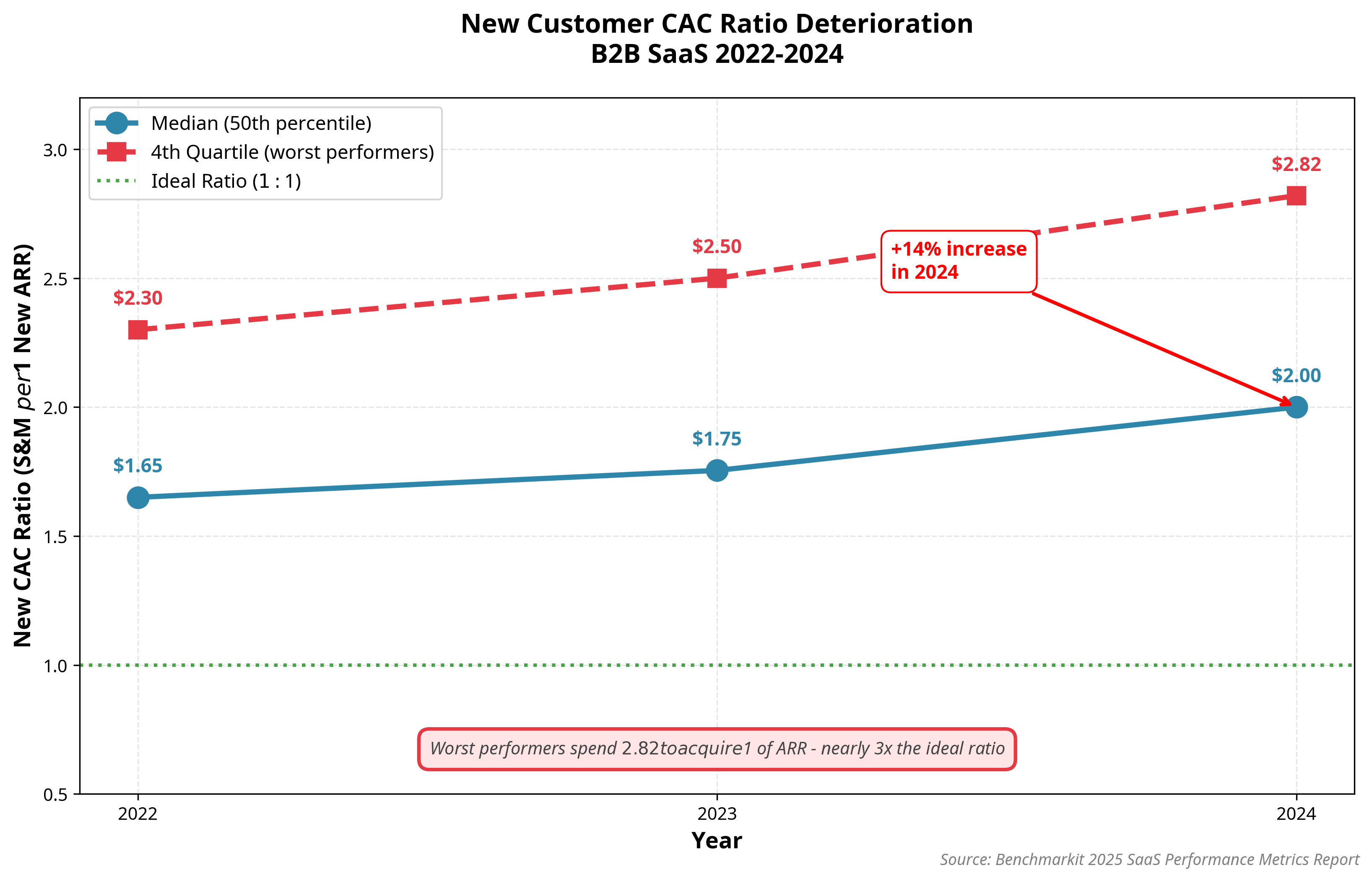
In 2024, it cost a median of $2.00 in S&M spend to acquire $1.00 of new customer ARR, a 14% increase in cost from the previous year [1]. For companies in the bottom quartile, the situation is even more dire, with some spending as much as $2.82 to acquire a single dollar of new revenue. This level of inefficiency is unsustainable and a major red flag for investors.
Benchmarking Your Performance: What Does “Good” Look Like?
CAC payback is not a one-size-fits-all metric. It varies significantly based on your target customer segment, Annual Contract Value (ACV), and industry. Understanding these nuances is key to setting realistic targets and accurately assessing your performance.
Payback by Customer Segment and ACV
As a general rule, the larger the customer, the longer the payback period. Enterprise sales cycles are notoriously long and resource-intensive, involving multiple stakeholders and complex negotiations. In contrast, products targeting consumers or small businesses (SMBs) often benefit from shorter, more automated sales motions.
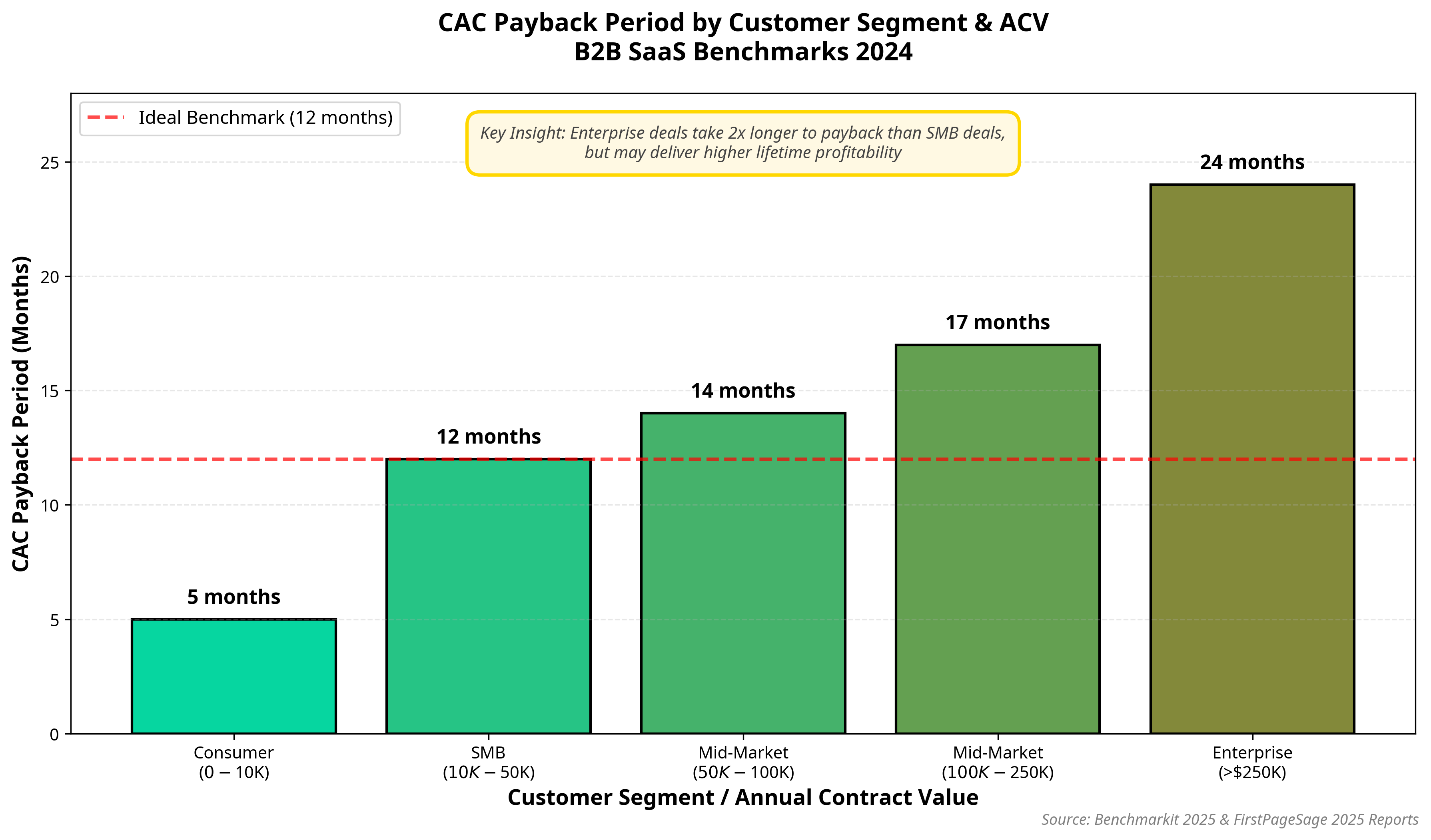
Data from multiple sources confirms this pattern, showing that enterprise-focused companies can have payback periods more than double those of their SMB-focused counterparts [1, 2]. While a payback period of over 24 months for an enterprise customer might be acceptable given the potential for a large and long-term contract, a similar figure in the SMB space would be a cause for serious concern.
Payback by Industry Vertical
Efficiency also varies by industry. Verticals like eCommerce and Medtech tend to exhibit faster payback periods, while more traditional sectors like Retail and Business Services often face longer recovery times. This is influenced by factors such as market maturity, competitive intensity, and the inherent value proposition of the software.
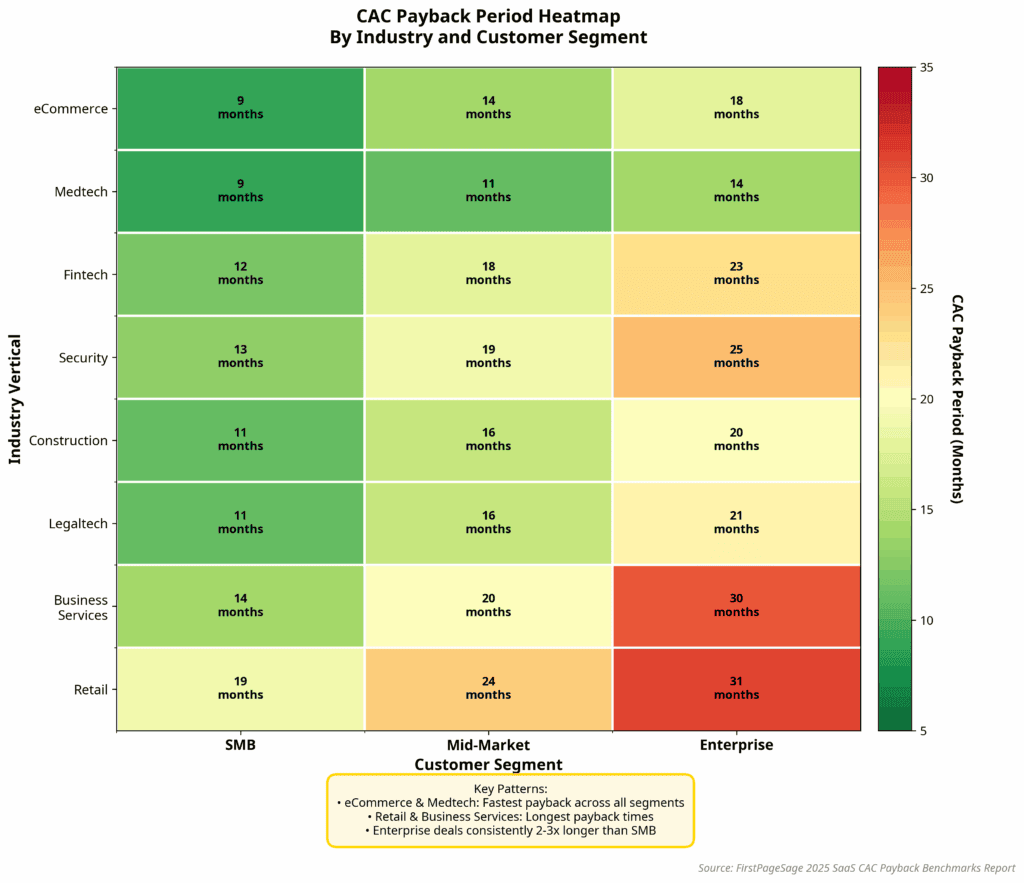
The heatmap above, based on data from the FirstPageSage 2025 Report, provides a comparative view across several key industries and segments [2]. Companies in high-efficiency verticals have a distinct advantage, but even in more challenging sectors, there is a clear distinction between average and top performers.
Lessons from the Public Markets: A Glimpse into Efficiency at Scale
Public SaaS companies offer a valuable benchmark for efficiency at scale. A recent analysis by Blossom Street Ventures of 60 public SaaS companies in Q2 2025 revealed a median payback period of approximately 8 months [3]. This is a fully loaded calculation that includes all operating expenses (COGS, S&M, G&A, and R&D), making it a more conservative and comprehensive measure than the S&M-only calculation typically used by private companies.
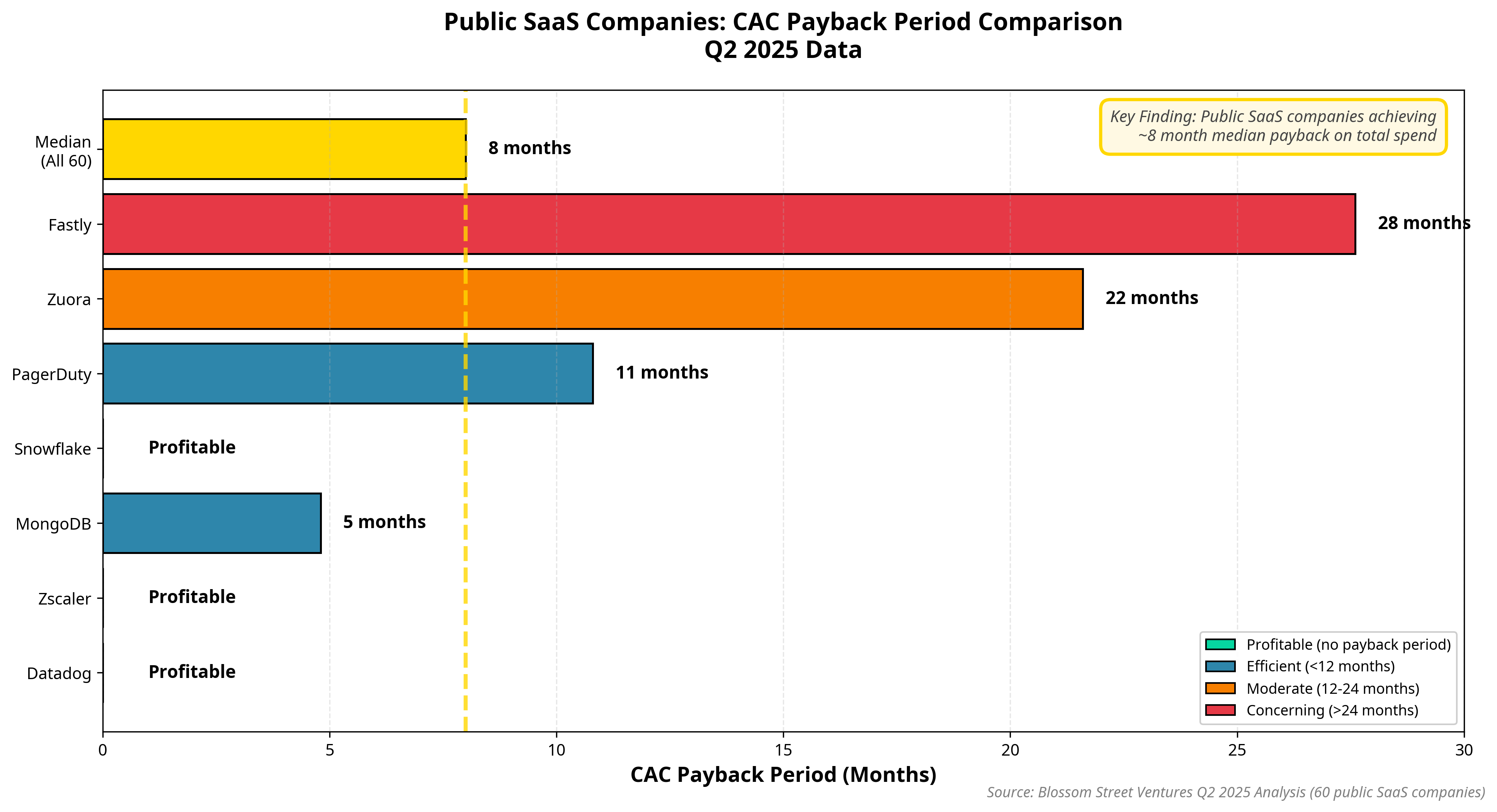
As the chart shows, top-tier companies like Datadog, Zscaler, and Snowflake are operating at or near profitability, effectively achieving an immediate payback. This level of efficiency is the gold standard and is driven by strong product-market fit, high net dollar retention, and scalable go-to-market models.
Case Study: Klaviyo’s Pre-IPO Journey to Efficiency
Real-world examples provide the most compelling lessons. Klaviyo, a marketing automation platform, offers a powerful case study in optimizing CAC payback. In the lead-up to its 2023 IPO, the company made a concerted effort to improve its go-to-market efficiency, as detailed in its S-1 filing with the SEC.
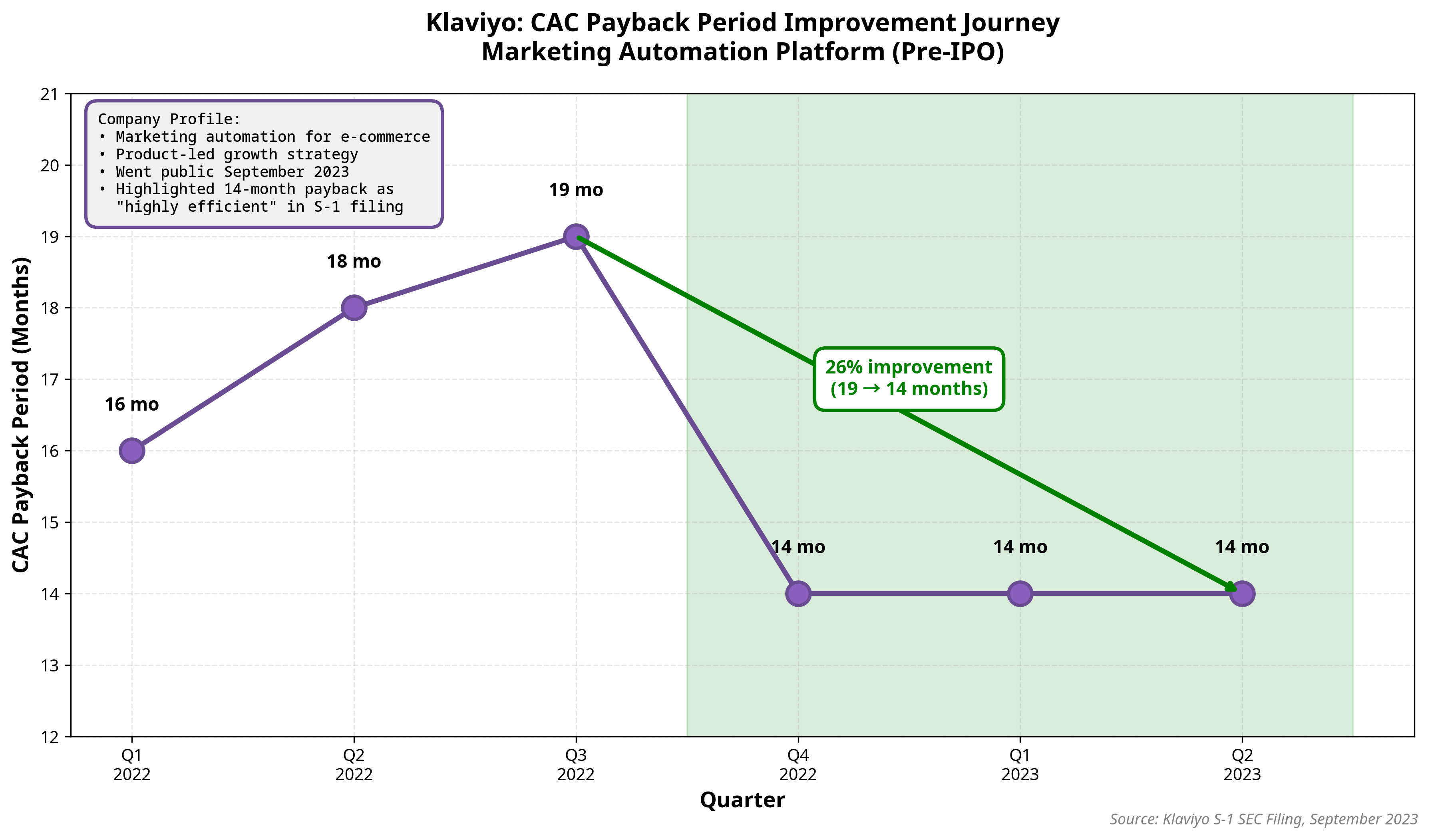
Between Q3 2022 and Q2 2023, Klaviyo successfully reduced its CAC payback period from a high of 19 months down to a stable 14 months—a 26% improvement in just nine months [4]. The company explicitly highlighted this 14-month payback as “highly-efficient” and a key strength of its business model, demonstrating how critical this metric is to public market investors.
Strategic Levers for Improving Your CAC Payback
Improving your CAC payback period requires a multi-faceted approach that touches every part of your go-to-market strategy. Based on our research, the following strategies have the most significant impact:
| Strategy | Description | Impact on Payback |
| Invest in Product-Led Growth (PLG) | Leverage the product itself as the primary driver of acquisition, conversion, and expansion. A self-serve or freemium model can dramatically lower S&M costs. | High |
| Optimize Pricing and Packaging | Ensure your pricing aligns with the value delivered. Implement annual, prepaid contracts to recoup costs upfront. | High |
| Focus on Customer Expansion | Drive upsells, cross-sells, and add-ons. Expansion revenue often has a near-zero CAC, significantly improving blended payback. | High |
| Improve Funnel Conversion | Systematically analyze and optimize every stage of your marketing and sales funnel to reduce leakage and increase velocity. | Medium |
| Target Higher-Value Segments | While payback may be longer, enterprise customers offer greater LTV and can be more profitable over the long term. | Variable |
| Boost Gross Margin | Reduce costs associated with delivering your service, such as hosting and support, to increase the margin on each customer. | Medium |
Product-led growth, in particular, has emerged as a powerful strategy for achieving a shorter CAC payback period. As noted by Drivetrain.ai, PLG companies typically achieve a shorter CAC payback period because they incur fewer marketing and sales-related costs [5].
Conclusion: The Path Forward
The era of inefficient growth is definitively behind us. For startup executives, the message from the market is clear: build a resilient business grounded in strong unit economics. The data shows that customer acquisition is becoming more difficult and expensive. Success in this new environment will belong to those who can master the art and science of efficiency.
By obsessively measuring, benchmarking, and optimizing your CAC payback period, you can not only weather the current market but also build a stronger, more profitable, and ultimately more valuable company for the long term.
References
[1] Benchmarkit. (2025). 2025 B2B SaaS Performance Metrics Benchmarks.https://www.benchmarkit.ai/2025benchmarks
[2] First Page Sage. (2024). SaaS CAC Payback Benchmarks: 2025 Report.
https://firstpagesage.com/reports/saas-cac-payback-benchmarks/
[3] Abdullah, S. (2025, October 15). Q2 2025 SaaS Payback Period Was Very Strong. Blossom Street Ventures. https://blossomstreetventures.medium.com/q2-2025-saas-payback-period-was-very-strong-4ebe83cedff8
[4] Klaviyo, Inc. (2023, September). Form S-1 Registration Statement. U.S. Securities and Exchange Commission. https://www.sec.gov/Archives/edgar/data/1835830/000162828023030618/klaviyoincs-1.htm
[5] Drivetrain.ai. (2025, August 4). What is CAC Payback? Formula, Benchmarks & How to Reduce it. https://www.drivetrain.ai/strategic-finance-glossary/cac-payback-period-formula-benchmarks-and-how-to-reduce-it